
By Simon Gedz, Local Realtor
Charles Rutenberg Realty · 30+ years of South Florida market expertise · Published October 15, 2026
Originally published on the S.G. Trust Team blog.
The dock looks pristine. The wood is fresh, the power pedestal is updated, and the listing says "deep water." It is easy to get swept up in the dream of stepping off your back porch and onto your deck. I have been navigating the South Florida market since 1995, and I have seen many buyers fall in love with the aesthetics of a property while completely ignoring the physics of their own vessel.
As of November 2026 on our site, there are 2,812 active homes in Fort Lauderdale, with a median list price of $750,000. When we narrow that focus to the 1,182 waterfront homes currently on the market, the median list price jumps to $1,050,000. When you are spending seven figures for a waterfront lifestyle, the last thing you want is a boat that sits idle because you can’t get it off the lift without a tugboat or a prayer.
The Hidden Geometry of the Canal
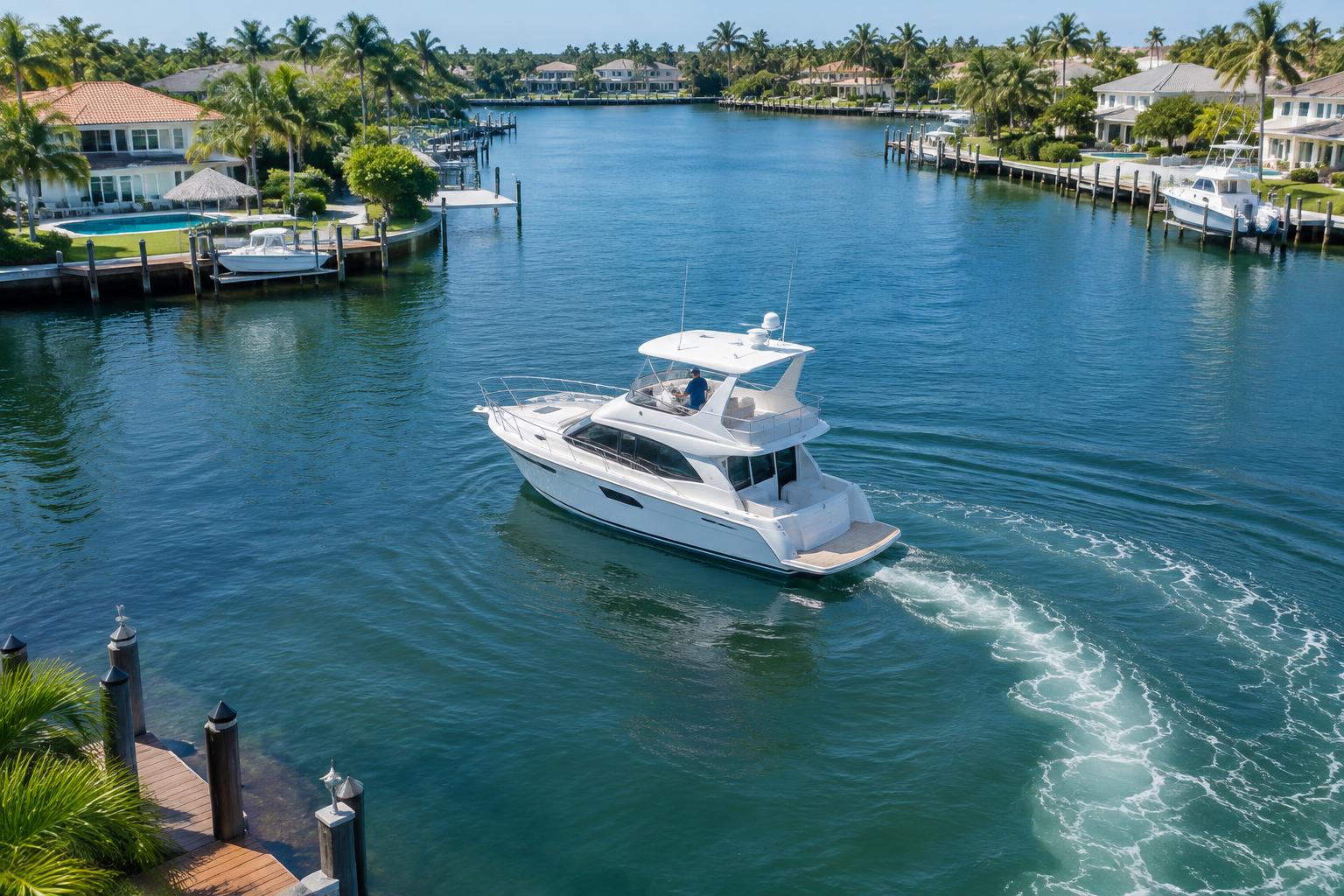
Docking isn't just about the length of your boat relative to the length of the seawall. It is about the turn. Before you put an offer on a home in neighborhoods like Las Olas, Coral Ridge, or Rio Vista, you must look at the waterway in front of the property.
Ask yourself: If I am coming in with a cross-breeze or an outgoing tide, how much room do I have to swing the stern? If the canal is narrow, that "easy" docking maneuver suddenly becomes a high-stress event every time you return from an afternoon offshore.
Many buyers assume that because they see a large center console or a sportfish sitting at the neighbor's house, their own boat will be fine. That is a dangerous assumption. Neighboring boats may have different beam widths, different draft requirements, or even different propulsion systems—like joystick docking versus traditional twin-screw setups—that make their maneuverability far superior to yours. You cannot rely on visual cues from neighboring docks to validate your own needs.
If you aren't sure how your specific boat will handle a specific canal, use our Dock & Draft Match tool to get a better sense of how your vessel's dimensions interface with typical South Florida canal layouts.
A Practical Checklist for Waterfront Buyers
When I take clients out to look at property, I bring a physical checklist. I suggest you do the same. Do not just look at the house; look at the infrastructure.
- The Turning Basin: Is the house located on a dead-end canal? If so, is there a turning basin at the end, or are you expected to back out all the way to the main waterway? Backing a 50-foot sportfish down a narrow residential canal for a quarter-mile is not a relaxing weekend activity.
- Fixed vs. Floating Docks: Verify what is permitted. Some homeowners associations or municipal codes in Fort Lauderdale have strict requirements regarding the type of dock structure you can maintain.
- Bridge Clearances: Are there fixed bridges between your potential new home and the Intracoastal Waterway or the Atlantic Ocean? If there are, you need to know the clearance height at mean high tide. A boat that fits perfectly in the canal is useless if it cannot clear a bridge to get to open water. Always verify the bridge height manually; do not rely solely on what is listed in a property flyer.
- Sea Wall Condition: Look for signs of "weeping" or erosion behind the wall. While the physical maneuverability is my primary concern for boaters, the structural integrity of the seawall is a major financial liability. If the wall is failing, your lift and your dock are essentially built on sand.
- Permits: Never assume that the dock, lift, or pilings currently at the property are fully permitted. Florida’s Department of Environmental Protection (DEP) and local municipal building departments have become increasingly rigorous. If you buy a property with an unpermitted dock, you may be forced to tear it down at your own expense. Verify every piece of infrastructure against the official property file.
Understanding the Local Market Dynamics
Buying in a place like Fort Lauderdale requires a specific strategy. When you look at waterfront homes, you are not just buying real estate; you are buying a utility. That utility needs to match your boat. If you have a deep-draft sailboat, you need to check the depth at the lowest low tide, not just the high tide.
It is also vital to understand the regulatory environment. Whether you are selling with the S.G. Trust Team or looking to buy, you need to be aware of the Florida Homestead Exemption rules if you are moving here from out of state. It can significantly impact your annual carry costs, which in turn influences the total budget you have for dock maintenance and boat storage fees.
I always tell my clients to compare different neighborhoods before making a final commitment. Every area has its own "nautical personality." A house in an older neighborhood might have wonderful character, but the canal widths might have been designed for smaller vessels than what we run today. Meanwhile, newer developments or renovated properties might have reinforced sea walls and wider turning radiuses. You can read my Fort Lauderdale waterfront neighborhood comparison to get a better sense of how these micro-locations differ from one another.
Don't Guess, Verify
The objective of our work together is not to make the buying process complicated; it is to ensure that you actually enjoy the lifestyle you are paying for. If you find a home that checks every box—the right square footage, the perfect kitchen, the right school district—but you have a lingering doubt about the water, stop.
Take your boat to the location. If you are serious, bring a captain who knows how to handle your specific vessel in tight quarters. Test the approach. Test the turn. If you can’t get the boat there, the house isn’t the right fit, no matter how beautiful the view is from the pool deck.
I have spent nearly 30 years helping people navigate these exact questions. Whether you are a local moving up to a larger waterfront property or you are moving from New York to South Florida, the process of verifying a dock's functionality is one of the most overlooked steps in the entire transaction.
Don't wait until after you have signed the closing documents to find out that your boat is a "permanent fixture" because it can't clear the turn in the canal. Do the homework now. Check the depth, verify the width, and understand the bridge clearance. If you are ever unsure, find a professional who can provide a second opinion on the marine logistics of the property. You can also read our client reviews to see how others have successfully navigated these challenges with our team's guidance.
Next step: Let’s discuss your specific boat size and the neighborhoods that offer the best turning radius for your needs. Call me at 954-562-1798 to get started on your search.
