
By Simon Gedz, Local Realtor
Charles Rutenberg Realty · 30+ years of South Florida market expertise · Published October 20, 2026
Originally published on my blog.
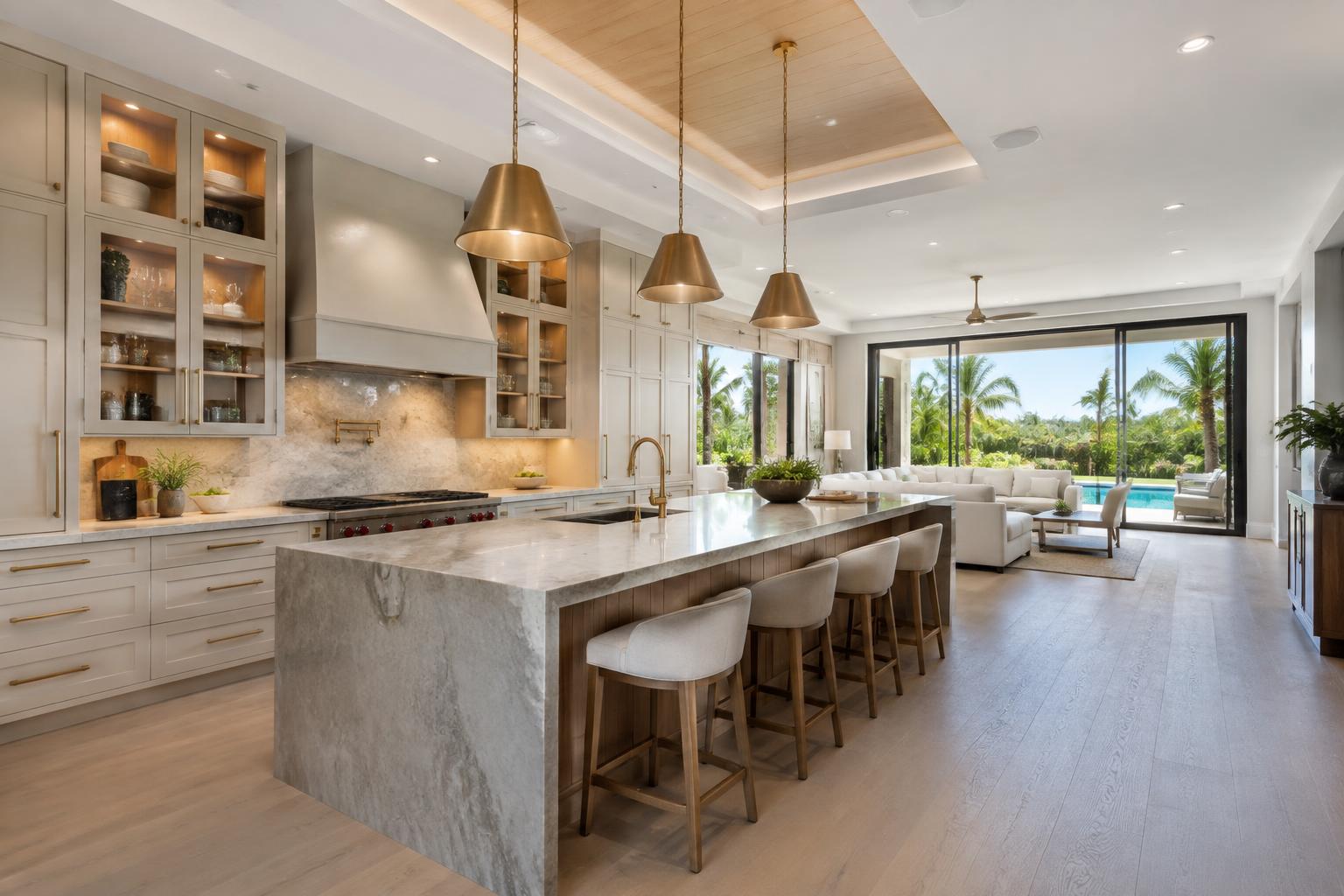
The house is gorgeous. I have walked through hundreds of these properties since I started in this business back in 1995. You walk in, and you are hit with the smell of fresh paint, the gleam of imported marble countertops, and a designer kitchen that looks like it belongs in a glossy magazine. It is tempting to write an offer on the spot because everything is brand new.
But as a Realtor, my job is to slow you down. I need you to ask yourself a hard question: How much are those renovations actually worth to you, and how much are you paying for someone else’s personal taste?
Renovation Has Value
Let’s be fair—a move-in-ready home has a legitimate premium. When you buy a house that has already been fully updated, you are buying back your own time. You are skipping the six months of contractor scheduling, the supply chain delays that plague South Florida renovations, and the decision fatigue of picking out thousands of individual tiles and fixtures. For many of my clients, that peace of mind is worth a significant premium.
However, in our current market, it is vital to keep your eyes open. As of November 2026 on our site, we are seeing 2812 active homes in Fort Lauderdale, with a median list price of $750,000. If you are looking specifically at the waterfront market, there are 1182 homes available with a median list price of $1,050,000. When you look at those numbers, you have to ask if the renovated property you are viewing is priced at the median because of the updates, or if it is priced at a premium because the seller is trying to recover every penny of their remodeling invoices.
But Cost Doesn't Automatically Equal Value
There is a fundamental difference between what a seller spent on a renovation and what the market will pay for it. If a seller spent $100,000 to renovate their kitchen, they often expect that $100,000 to be added directly to the asking price. That is rarely how it works.
Appraisers do not look at receipts; they look at comparable sales. If the house next door sold for $800,000 and the house you are looking at is listed at $950,000 because of "designer upgrades," you need to be very careful. You might be paying for the seller's specific aesthetic choices, not for an increase in the property's underlying market value. I always advise my clients to look at the neighborhood comparisons to see if the price hike is justified by the area or just by the countertops.
Taste Is Personal
One person’s dream kitchen is another person’s first demolition project. I have seen homes with $80,000 kitchens that the buyer hated the moment they walked in. If you have to rip out the flooring or repaint the custom cabinetry, that "move-in-ready" home suddenly requires a renovation anyway.
Before you make an offer, sit down and look at the finishes critically. Are they high-quality materials, or are they builder-grade finishes sold as "luxury"? I help my clients verify these things during the inspection period. If the renovation was done without permits—which happens far too often in South Florida—you could be inheriting a massive headache. You must verify that any structural changes, electrical upgrades, or plumbing work were properly permitted and closed out by the local building department. If they were not, that "renovated" home is actually a liability.
Compare the Alternatives
Before you commit, look at the unrenovated property down the street. It might be listed for $150,000 less. You could use that savings to renovate the kitchen exactly the way you want it, rather than paying for someone else’s version of the "perfect" home.
When you weigh these options, consider the cost of living in our area. Property taxes in Florida can change based on the purchase price, and while the homestead exemption helps, you should always run the numbers on what your monthly carry costs will be after the purchase. Does the renovation value justify the extra property tax burden you might face compared to a house at a lower price point?
Don't Forget What Can't Be Renovated
This is where I tell most of my clients to focus. You can change a kitchen, but you cannot change the lot. You cannot change the waterfront orientation or the boat size compatibility of the dock.
When you are looking at waterfront homes, focus on the sea wall, the depth of the canal, and the bridge heights if you own a boat. A beautiful kitchen inside a house that sits on a shallow canal where you cannot keep your vessel is a bad investment. The location, the lot orientation for sun exposure, and the neighborhood vibe are the elements that determine long-term appreciation. Do not let a fancy light fixture distract you from a property that has poor lot drainage or a failing sea wall.
Buy the Whole Property
When we look at selling your home or buying a new one, I encourage you to look at the "bones." Check the roof age, the age of the AC units, and the condition of the electrical panels. I have seen beautiful interiors hide older systems that will cost you thousands to replace within your first two years of ownership.
Before you sign on the dotted line, read through the biggest mistakes buyers make in our region. These include failing to account for the impact of Florida’s climate on building materials or ignoring the long-term maintenance costs of certain finishes. My goal is to ensure you feel as confident about your purchase after the keys are in your hand as you did during the first showing.
I have spent decades watching market cycles, from the boom times to the more challenging ones. I have seen buyers win by being patient and I have seen buyers lose by getting emotionally attached to a house that was just a "pretty face." Whether you are moving from New York or just moving across town, the goal remains the same: identify a property that offers solid structural value and long-term potential.
If you are currently evaluating a property and want an objective opinion on whether those upgrades represent real value or just seller bias, let’s talk. It is always helpful to have a second set of eyes on the home inspection report and the surrounding market data. You can find more of my thoughts and client testimonials here to see how I approach these deals.
When you are ready to start your search or need an honest assessment of a potential home, remember that there is no substitute for local experience. We can review the current active inventory together and make sure you aren't overpaying for someone else's taste when you should be investing in your own future.
Next step: Let's discuss your specific goals for your next property. Please call me at 954-562-1798 and let's get to work.
