
By Simon Gedz, Local Realtor
Charles Rutenberg Realty · 30+ years of South Florida market expertise · Published 2026-08-10
S.G. TrustTeam Market Insight | Fort Lauderdale, Boca Raton, Hollywood, Lighthouse Point & Pompano Beach
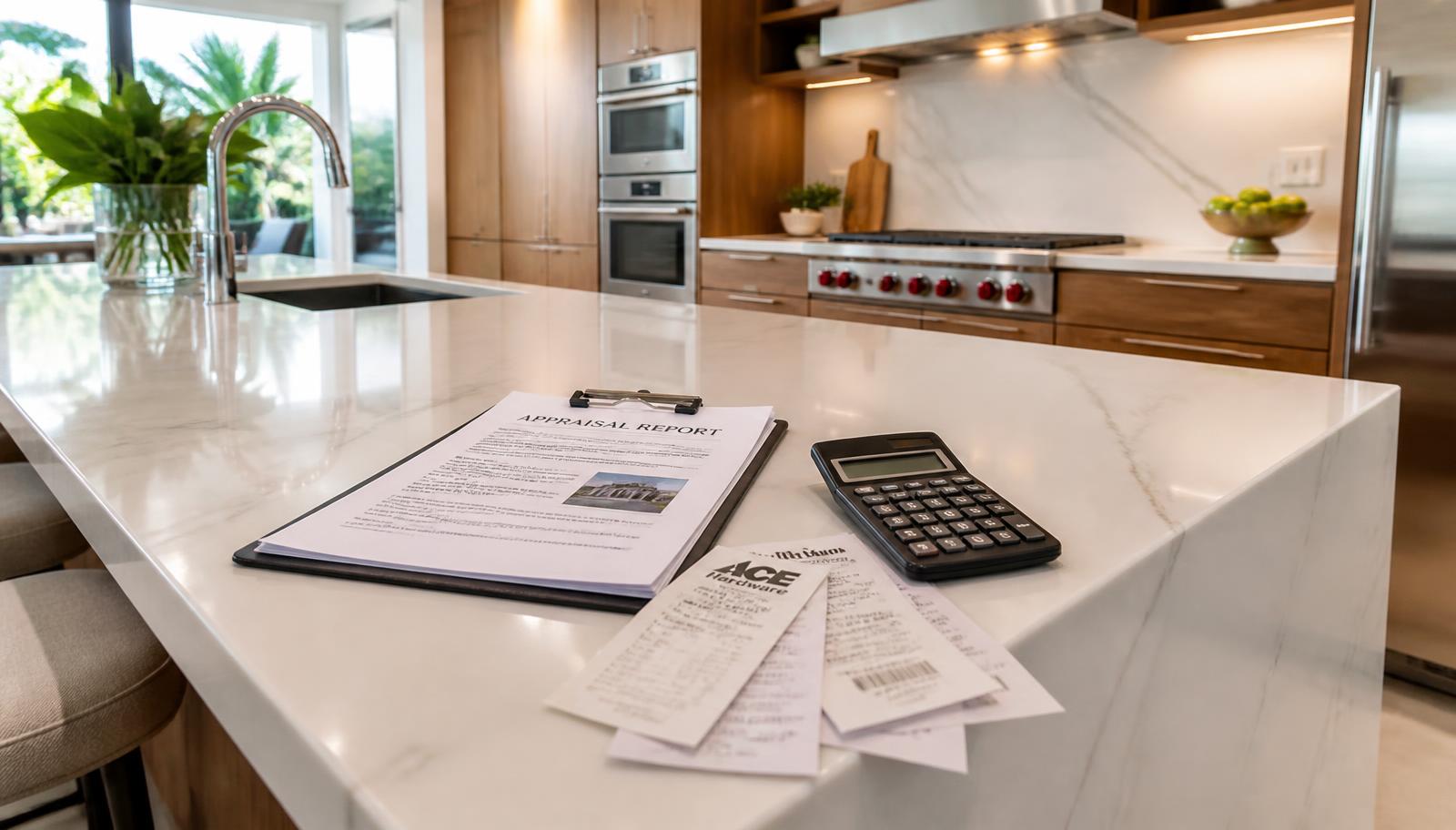
One of the most common surprises we walk sellers through has nothing to do with the new appraisal reporting standard rolling out this November — it's a much older, and more misunderstood, principle of how appraisals actually work: what you spent on a renovation is not what an appraiser credits you for.
If you've put $80,000 into a new kitchen, it's natural to expect that number to show up, dollar for dollar, in your home's appraised value. It usually doesn't — and understanding why can save you from a frustrating conversation at the worst possible time in a transaction.
Cost and Value Are Two Different Questions
An appraiser isn't in the business of reimbursing you for construction receipts. Their job is to answer a market question: what would a buyer actually pay extra for this home because of that upgrade? That number — called the feature's contributory value — is very often lower than what the renovation cost to install, sometimes significantly so.
This isn't a flaw in the process. It reflects a simple reality: the cost of materials, labor, and finishes doesn't automatically translate into what the market will bear in a given price range and neighborhood.
How Appraisers Actually Land on the Number: Paired Sales Analysis
Rather than pricing your renovation from the receipts, appraisers look at the market itself, using a method called paired sales analysis:
- They identify two or more recently sold homes in your area that are otherwise highly similar — same general size, condition, and location
- One of them has the upgraded feature (say, a renovated kitchen); a comparable one doesn't
- After adjusting for every other difference between the two, whatever price gap remains is attributed to that feature
If a renovated-kitchen home sold for $30,000 more than a nearly identical home with a dated kitchen, that $30,000 — not your $80,000 receipt — is the figure the appraiser is likely to work with.
Importantly, this isn't about what one neighbor happens to have done. Appraisers typically pull from a broader set of comparable sales — similar homes, similar price range, sold within roughly the last six to twelve months — not a single adjacent property.
Why This Catches Sellers Off Guard
Overimprovement. If your renovation significantly exceeds what's typical for your price range or neighborhood, the market often won't fully reward the extra spend. A high-end kitchen in a modest neighborhood is the classic example — beautiful, but not something buyers in that price bracket are shopping for or willing to pay a premium on.
Expectation vs. premium. In some segments of the South Florida market, a renovated kitchen is closer to a baseline buyer expectation than a standout feature. In that case, its real value may show up less as "added value" and more as protection against a negative adjustment — an outdated kitchen dragging the number down rather than a modern one pushing it up.
Quality and permits still matter. A renovation that's permitted, well-documented, and executed to a professional standard is far more likely to be recognized and credited appropriately than one an appraiser can't verify. This is exactly why having your documentation organized — permits, before/after photos, contractor records — matters. It doesn't set the dollar amount, but it does support the appraiser actually being able to credit what's real.
What This Means Before You Renovate — or Before You Sell
If you're planning an upgrade with resale in mind, it's worth asking what similar homes in your specific price range and neighborhood typically sell for with and without that feature, rather than assuming the project will pay for itself dollar for dollar. And if you've already completed the work, organizing your documentation ahead of an appraisal — permits, receipts, before-and-after records — puts the appraiser in the best position to credit it accurately, even if the number that comes back is a market-based figure rather than a reimbursement.
The Bottom Line
Appraisals are a reflection of what the market will pay, not a running tally of what you've spent. Understanding that distinction before you renovate — or before your home goes under contract — helps set realistic expectations and avoids a difficult conversation at the appraisal stage of a sale.
If you're weighing a renovation with resale value in mind, or want a sense of how your home's recent upgrades are likely to be viewed in today's market, we're happy to walk through it with you. You can start with a free home value estimate.