
By Simon Gedz, Local Realtor
Charles Rutenberg Realty · 30+ years of South Florida market expertise · Published 2026-08-10
S.G. TrustTeam Market Insight | Fort Lauderdale, Boca Raton, Hollywood, Lighthouse Point & Pompano Beach
Every home sale eventually runs into the appraisal — the moment where a third-party opinion of value either confirms your contract price or threatens to unravel it. For years, "For Sale By Owner" sellers have managed to navigate that moment well enough, mostly by luck and a cooperative appraiser. Starting November 2, 2026, that margin for luck gets a lot thinner.
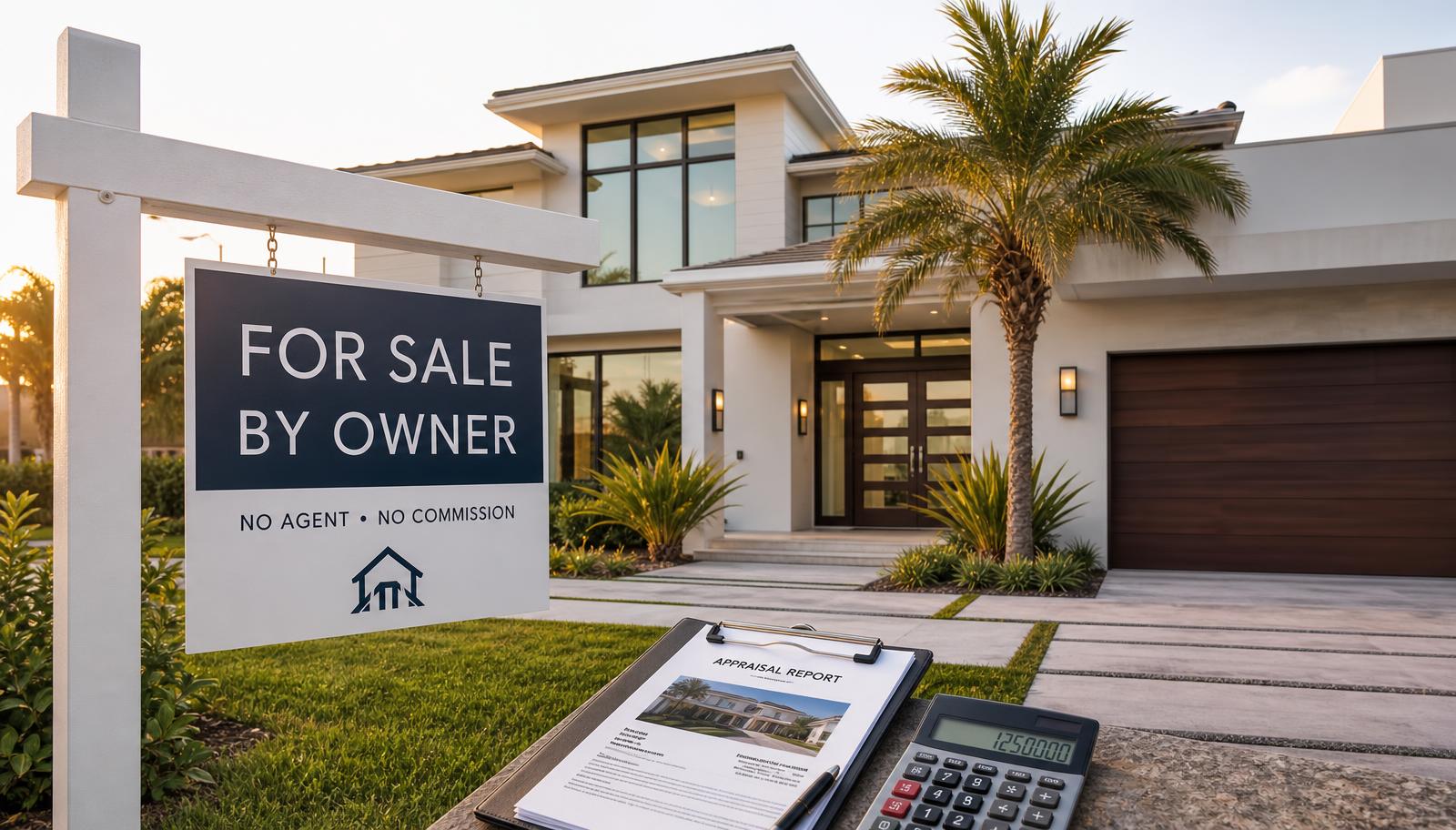
We covered the mechanics of the new UAD 3.6 appraisal standard in our last post — here's what it specifically means if you're trying to sell your own home without an agent.
The Old Appraisal Process Was Forgiving. This One Isn't.
The legacy appraisal form was largely narrative — an appraiser walked the property, took some notes, filled in a fairly generic template, and moved on. A seller who wasn't especially organized could usually still get a fair result, because the form itself didn't demand much precision.
UAD 3.6 flips that. It's a dynamic, data-driven report that expands based on the specific features of your home — which means the appraiser now needs more granular, verifiable information than before: permit numbers, energy-efficiency specs, resiliency documentation, upgrade histories. If that information isn't readily available, it simply doesn't make it into the report, and your valuation can quietly come in lower than it should.
Three Places FSBO Sellers Will Feel This Most
1. You won't know what the appraiser is actually looking for.
Under the new format, appraisers are expected to reach out more often to confirm property details — and they're used to calling a listing agent, not a homeowner who may not know a permit number off the top of their head or where their impact-window product approval documents are filed. An agent who does this regularly knows exactly what's being asked and why.
2. Your upgrades may not get credited.
That new roof, the impact windows, the updated A/C system — none of it automatically shows up in an appraisal. It has to be documented and presented in a way the appraiser can verify and enter into the new expanded data fields. Without someone organizing that ahead of time, verbally mentioning an upgrade during a walkthrough often isn't enough to move the number.
3. The line between "helpful" and "influencing" gets easier to cross by accident.
Sellers are allowed to provide documentation to an appraiser. What you can't do — and this rule isn't new, but it matters more as data becomes more central to the process — is attempt to influence the appraiser's opinion of value. An experienced agent knows how to hand over the right information the right way. A seller managing this for the first time, with real money on the line, is far more likely to unintentionally overstep, which can create friction or even flag concerns with the lender.
Where This Leaves FSBO Sellers
None of this makes selling FSBO impossible. But it does raise the bar on what "doing it yourself" actually requires: staying current on evolving appraisal standards, organizing documentation an appraiser will ask for before they ask for it, and knowing exactly where the line sits between providing information and appearing to push a number. That's a meaningfully bigger lift than it was a year ago.
For sellers weighing the FSBO route purely to save on commission, it's worth running the math on the other side too — what a low or contested appraisal can cost in a renegotiated price, a delayed closing, or a deal that falls apart altogether. That risk didn't exist in the same way under the old appraisal process.
The Bottom Line
The appraisal used to be one of the more forgiving parts of a real estate transaction. Under the new standard, it's becoming one of the more document-intensive — which changes the calculation for anyone selling without representation. If you're currently considering FSBO, or already have your home listed that way, it's worth understanding exactly what the appraiser on your file will be asking for this fall.
We're happy to walk through what a strong appraisal-ready file looks like for your specific property, whether or not you decide to list with us. You can also start with a free home value estimate.