
By Simon Gedz, Local Realtor
Charles Rutenberg Realty · 30+ years of South Florida market expertise · Published October 15, 2026
Originally published on the S.G. Trust Team blog.
Buying a home in Fort Lauderdale is a different game when you are bringing a boat with you. I have been helping clients navigate the South Florida market since 1995, and I have seen too many buyers fall in love with a beautiful view only to realize later that their boat won't fit, the tide makes it impossible to leave their dock, or they are trapped behind a bridge that never opens. As of November 2026 on our site, there are 2,812 active homes in Fort Lauderdale with a median list price of $750,000. Of those, 1,182 are waterfront properties with a median list price of $1,050,000. That is a significant premium for the water, so you have to make sure you are getting what you pay for.
Whether you are looking at Fort Lauderdale waterfront homes in neighborhoods like Las Olas, Coral Ridge, or Harbor Beach, you need to speak the language of the canals. Here are the ten terms every boater needs to master before putting down a deposit.
1. Waterfront Frontage
This refers to the width of your property line along the water. Do not confuse this with dock length. You might have 100 feet of waterfrontage, but local zoning or environmental regulations might restrict how long your dock can actually be. Always check the property survey.
2. Dock
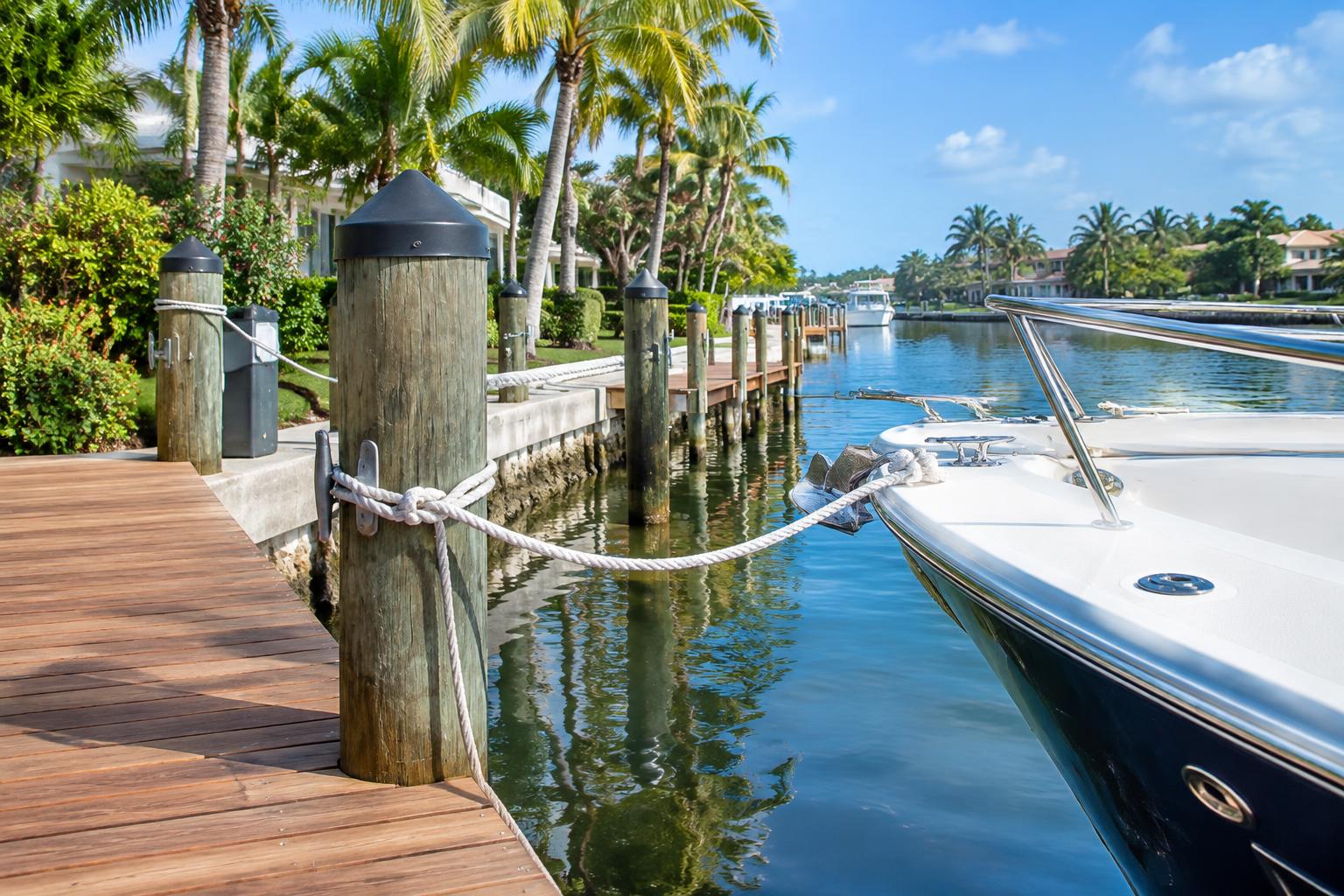
A dock is not just a place to tie up. In Fort Lauderdale, you have fixed docks, floating docks, and various materials from pressure-treated pine to Brazilian hardwoods like Ipe. You need to inspect the structural integrity of the pilings. If you are buying a property, I always recommend a specialized marine inspection.
3. Seawall
This is the retaining wall that separates your land from the canal. In Florida, if a seawall fails, it can take your backyard with it. Look for signs of erosion behind the wall or cracks in the cap. If you are buying, verify when the seawall was last replaced or repaired.
4. Canal
Not all canals are created equal. Some are wide turning basins, while others are narrow fingers that make maneuvering a large vessel a nightmare. When I show properties, we look at the canal width relative to your boat’s beam.
5. Fixed Bridge
If you have a tall mast or a flybridge, this is your enemy. A fixed bridge has a set clearance that does not change. If your boat is taller than that clearance, you are restricted to whatever water exists between your home and that bridge.
6. Drawbridge / Movable Bridge
These bridges open on a schedule or upon request. Before you buy, look up the bridge schedule for the specific route to the ocean. You do not want to be stuck waiting for a bridge to open when you are trying to head out for a day of fishing.
7. Draft
This is how deep your boat sits in the water. In the Intracoastal Waterway and some residential canals, depth can fluctuate due to siltation. Use our Dock & Draft Match tool to ensure the depth at the dock at low tide is sufficient for your vessel’s draft.
8. Clearance
This is the vertical space available between the waterline and the bottom of a bridge or power line. Always calculate your clearance at high tide to be safe. Even if you think you have room, a "King Tide" can change everything.
9. Ocean Access
This is a term used loosely in listings. "Ocean access" can mean five minutes to the inlet or two hours of idling through slow-speed zones and bridges. I suggest checking the route on a chart before you finalize your offer.
10. Usable Dockage
This is the most critical metric. It is the practical length of the dock space that you can actually moor a boat against without violating property line setbacks or encroaching on your neighbor’s waterway access. Never assume the full waterfrontage is usable dockage.
Beyond the Terms: The Buyer’s Checklist
If you are moving from New York or Chicago, the way we value property here can be jarring. You are paying for the lifestyle, but you are also paying for the maintenance of that lifestyle. When we analyze homes for sale in Fort Lauderdale, we focus on the specifics that affect your bottom line.
Before you commit, I recommend you go through this verification process:
- The Survey: Get a current boundary survey. It will show you exactly where your property lines extend into the water.
- The Marine Inspection: A standard home inspector will look at the roof and the AC. You need someone who understands marine construction to look at the seawall, the pilings, and the electrical shore power setup.
- Tidal Analysis: Visit the property at low tide. If the water has receded to the point where your boat would be sitting in mud, that is a dealbreaker.
- HOA and Zoning: Some neighborhoods have specific rules about boat size, height, and whether you can have a boat lift. Always review the CC&Rs before buying.
- Insurance: Check with your insurance agent regarding the age and condition of the seawall. This can impact your policy premiums significantly.
Why Context Matters
Buying in South Florida involves understanding more than just the technical aspects of the water. For example, if you are looking at Fort Lauderdale waterfront homes, you should consider the proximity to local services, grocery stores, and the airport. I have written extensively on how to compare different waterfront neighborhoods and how the cost of living in Fort Lauderdale compares to other parts of the country. If you are relocating from New York, there are also tax implications—such as the Florida Homestead Exemption—that you should understand before you close on your property.
I have spent my career at Charles Rutenberg Realty focusing on the S.G. Trust Team approach: we verify, we inspect, and we ensure that our clients are protected. Whether you are selling your current property or looking for your first deep-water home, having someone with local experience who understands the nuances of the waterways is essential.
You can read my full Fort Lauderdale boater’s guide for a deeper dive into these topics. It covers everything from bridge clearance charts to what you need to know about navigating the canals safely.
If you want to look at specific properties that fit your boat’s size and draft requirements, start by browsing our waterfront home search, where we categorize properties by boat size compatibility. For those who want to see what my past clients have to say about the process, feel free to check out our reviews.
The Fort Lauderdale market is fast-paced, and inventory changes daily. Between the 1,182 waterfront homes currently on the market as of November 2026, there is likely a perfect match for your vessel, but you need to act with precision and be armed with the right data.
Next Step
If you are ready to start your search or if you have questions about a specific waterfront property you have seen, give me a call. We can discuss your boat's specifications and narrow down the neighborhoods that provide the easiest access to the ocean for your specific needs. Call Simon at 954-562-1798.
