
By Simon Gedz, Local Realtor
Charles Rutenberg Realty · 30+ years of South Florida market expertise · Published October 9, 2026
Originally published: October 2026
When I first started helping clients navigate the South Florida real estate market back in 1995, the conversation about waterfront living was relatively simple. Today, as we look at the current market, where we have 2812 active homes in Fort Lauderdale with a median list price of $750,000, the stakes feel much higher. Out of those, 1182 are waterfront listings with a median price of $1,050,000, as of November 2026 on our site. If you are part of the crowd looking for a waterfront property, you are likely planning to put a boat behind that house. If that is the case, you need to understand the fundamental difference between fixed and non-fixed bridge access. It is the single most common "miss" I see buyers make during their search.
You may see Fort Lauderdale waterfront properties described in ways that emphasize bridge conditions. Why? Because for certain boats, what is between your dock and your destination—usually the open ocean—can be extremely important. I have spent decades helping families find homes that actually fit their lifestyle, and I have seen too many owners forced to move simply because they bought a house that turned their hobby into a headache.
What Is a Fixed Bridge?
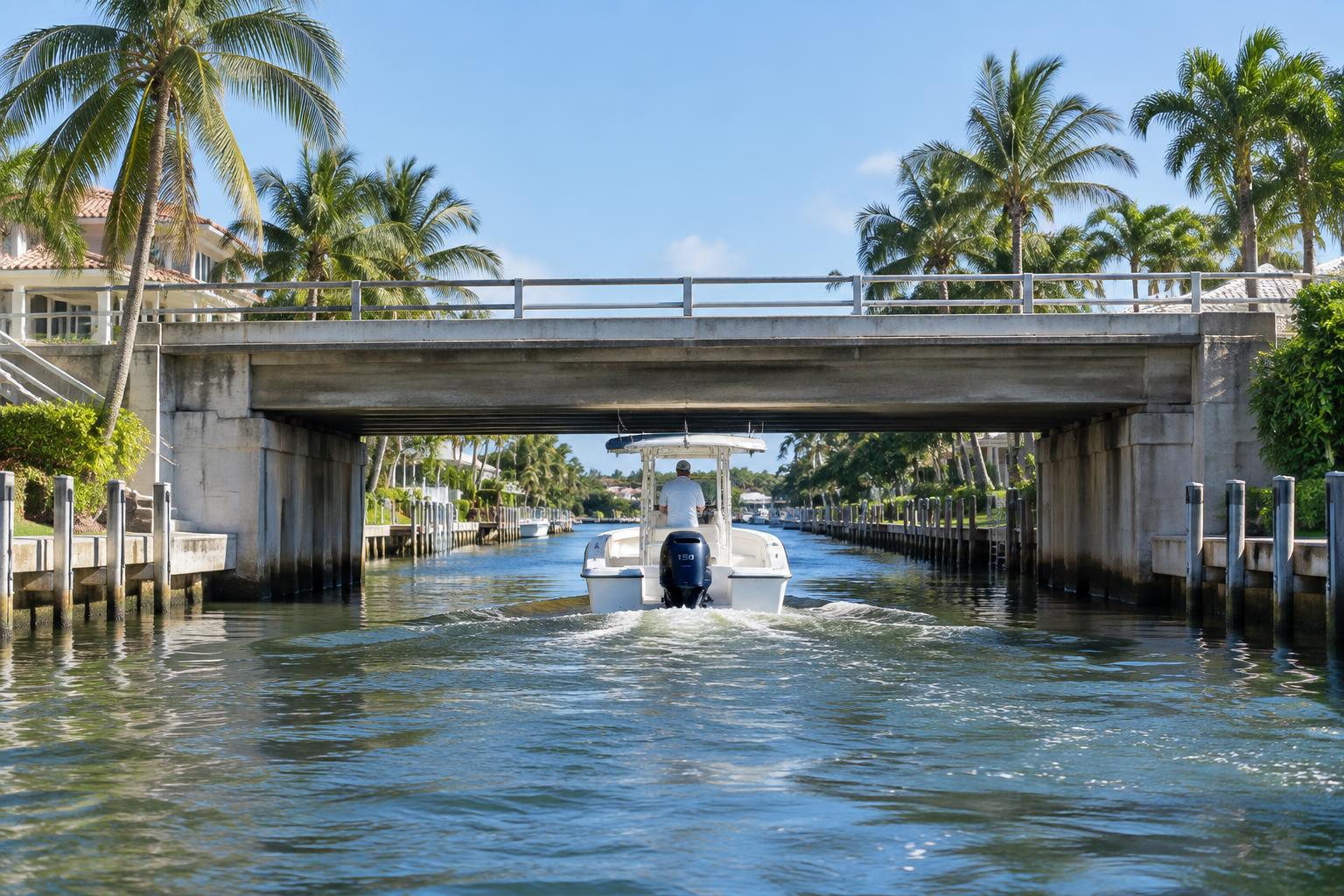
In simple terms, a fixed bridge is a structure that does not move, lift, or rotate to allow taller vessels through. In Fort Lauderdale, these are common across our intricate canal systems. That means the available clearance—the vertical distance between the water line and the underside of the bridge—is constant.
This number is not just a suggestion; it is a hard limit. If your mast, tuna tower, or arch is even a few inches taller than the clearance provided at high tide, you are not going to the ocean. Furthermore, clearance levels can fluctuate based on tide cycles. What you clear at low tide might trap you on the wrong side of the bridge during a high tide. Always verify the published vertical clearance, but keep in mind that official government charts are the only source you should trust. Never rely on hearsay or a seller's estimate.
Why Does That Affect Real Estate?
Imagine finding your dream waterfront house. The dock is beautiful, deep water is available, and the backyard is perfect for entertaining. Then, you close on the property, move your boat in, and discover that your weekend boating plans—perhaps heading to the Bahamas or cruising up the coast—are physically impossible because of a bridge just a mile down the canal.
That is exactly the kind of issue waterfront due diligence is designed to prevent. When we analyze waterfront homes in Fort Lauderdale, we aren't just looking at the square footage or the pool; we are looking at the path from your seawall to the Intracoastal Waterway and beyond. I always encourage my clients to pull up a nautical chart and map out their potential route. Ask yourself: at what point do I reach open water? How many bridges do I cross? Are they all fixed?
Does Every Buyer Need No-Fixed-Bridge Access?
Not necessarily. Your vessel and your boating plans matter. If you own a center console with a collapsible T-top or a smaller deck boat that you use primarily for harbor cruising or dining at waterfront restaurants, a fixed bridge might not bother you at all. In fact, many of my clients prefer homes in quieter, protected areas that happen to have bridge restrictions, as these areas often have less boat traffic and lower prices than the "open-access" luxury deep-water properties.
A property does not automatically become "bad" because of a bridge. It may simply be inappropriate for a particular buyer. If your primary goal is to have a place to dock a tender or a small fishing boat, you might be overpaying for "no-fixed-bridge" access that you don't actually need.
Think About Your Next Boat
There is another question sophisticated buyers should consider: Will this property work if I eventually buy a different boat?
We have seen a trend in the local market where buyers upgrade their vessels over time. If boating is central to why you are purchasing the home, think beyond today. If you buy a house with a 10-foot bridge restriction, you are essentially capping the type of boat you can own for as long as you live in that home. I often work with clients who are currently shopping for their first boat, and I advise them to consider a property that leaves room for growth. If you might eventually want a sport fisher with a substantial tower, you need to account for that before you sign the contract. You can find more information on matching your vessel to a property here.
Match the Property to the Vessel
The goal isn't automatically finding a property with the fewest possible restrictions. It is finding one that works for the way you intend to use it. When we go out to view properties, I recommend bringing a checklist:
- Boat Specifications: Know your boat’s exact air draft (the distance from the water to the highest point). Add a safety margin of at least 1-2 feet.
- The "Route to Sea" Test: Physically drive or boat the route from the prospective home to the inlet. Are there any tight turns? Are there any low-hanging power lines or private docks encroaching on the waterway?
- Neighborhood Considerations: Different neighborhoods have different bridge layouts. You can learn more about specific areas in my Fort Lauderdale waterfront neighborhood comparison.
- Dock Requirements: Don't forget that bridge height is only one factor. Depth, beam width, and dock length are equally critical. You can explore homes suitable for specific boat sizes here.
A Practical Approach to Due Diligence
Beyond the physical bridge height, you need to verify the legal and environmental aspects of the property. Is the dock permitted? Does the seawall meet current city requirements? When you are looking at properties with a median list price in the seven-figure range for waterfront, you have to be precise.
I also frequently advise my clients to look into the broader implications of their move. If you are relocating from out of state, there are nuances to tax residency and homesteading that you should understand—my Florida homestead exemption guide is a good starting point. If you are coming from a state like New York, the transition involves more than just finding a new house, and I’ve detailed some of that in my guide to moving to South Florida.
Ultimately, real estate is about mitigating risk and maximizing enjoyment. If you are buying a waterfront home, you are buying a lifestyle. You want to make sure that the boat you envision sitting on that lift is actually going to be able to leave the dock when the tide is high and the sun is out. I have helped countless buyers avoid the common pitfalls of the waterfront market, and I encourage you to read through our complete Fort Lauderdale waterfront buyer’s guide before you make an offer.
If you are ready to start your search, or if you are looking to sell your current waterfront home to find something that better accommodates your boating needs, take a look at my client reviews to see how I have helped others navigate these waters.
Next step: If you want to discuss your specific boating needs and how they align with current inventory, give me a call at 954-562-1798. Let's ensure your next waterfront home is a perfect match for you and your boat.