
By Simon Gedz, Local Realtor
Charles Rutenberg Realty · 30+ years of South Florida market expertise · Published October 29, 2026
Originally published: July 2024. Updated: November 2026.
Here is the problem with luxury real estate in South Florida: almost everything can look impressive during a 30-minute showing. I have been navigating these neighborhoods since 1995, and I have seen countless buyers fall for "shiny object syndrome." They get dazzled by a custom wine cellar or imported Italian tile, while ignoring the fact that the property sits on a north-facing lot that will never see the sunset, or that the seawall is nearing the end of its functional life.
The question isn't what looks good on Instagram; the question is what will still matter after you have lived in the home for three years. Whether you are browsing Fort Lauderdale homes for sale or looking for a specific lifestyle, it is vital to categorize what you are paying for.
Category 1: Things You Can’t Easily Change
These are the non-negotiables. In our market, as of November 2026 on our site, there are 2,812 active homes, with a median list price of $750,000. However, when you narrow that down to our 1,182 waterfront listings, the median price jumps to $1,050,000. That premium is almost entirely for the "Category 1" attributes.
Location, lot orientation, water frontage, and neighborhood character are permanent. You cannot move a house from a busy street to a quiet cul-de-sac in Las Olas or Bay Colony. You cannot change the width of the canal or the bridge clearance if you have a high-profile vessel. Before you fall in love with the interior design, look at the plat survey and the flood zone map. Verify the FEMA base flood elevation requirements, as these dictate insurance costs and renovation limits.
Category 2: Things That Are Difficult to Change
Floor plans and major structural configurations fall here. We often see buyers look at homes in established neighborhoods like Coral Ridge, thinking, "I will just knock out this wall and expand the living area." While possible, doing so in a luxury home often involves shifting load-bearing beams, rerouting complex HVAC systems, or dealing with strict municipal zoning ordinances.
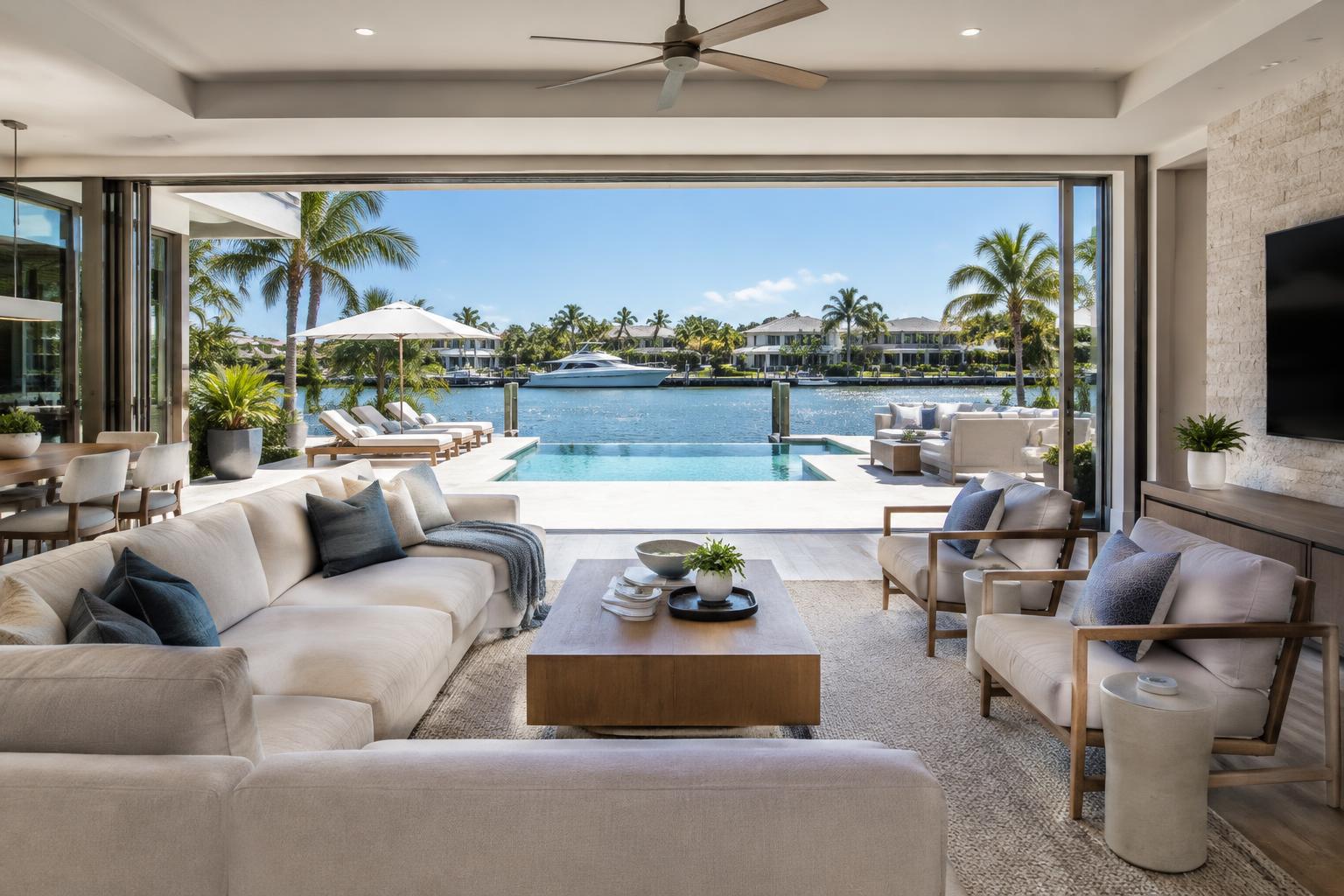
Pool placement is another major one. If the pool is on the side of the house instead of the rear, you are stuck with that orientation. Changing the "indoor-outdoor relationship"—the way your sliding glass doors meet the patio—is an expensive architectural undertaking. If you want a seamless transition from your great room to the water, buy a house that already has it.
Category 3: Things You Can Change
Furniture, paint, decor, and even cabinetry are cosmetic. I often tell my clients to ignore the staging. If you don't like the color of the cabinets or the style of the chandelier, that is a solvable problem. Do not let these minor aesthetic hurdles prevent you from buying a house that hits all your Category 1 requirements. Conversely, do not pay a premium for a "designer-ready" home if you plan on gutting the kitchen anyway.
For Boaters, Add Another Category: The Water
If you are coming to South Florida for the boating lifestyle, the water is not just a view—it is a functional utility. A beautiful chef’s kitchen does not solve a shallow canal or a difficult docking maneuver.
Before you commit to a waterfront property, use a Dock & Draft Match tool to ensure your boat fits the depth and the beam requirements. Verify the seawall age and condition through a professional marine inspector. In South Florida, seawalls are a significant capital expense. I have helped many clients review waterfront homes specifically with an eye toward bridge heights and "no-wake" zone logistics. If you need a deep-water dock with easy ocean access, do not settle for a property that forces you to navigate miles of slow-speed zones just to reach the inlet.
Pay for Convenience You’ll Actually Use
Luxury is about the removal of friction. Does the house have impact windows and doors? In our climate, this is more than a feature; it is an essential layer of security and insurance mitigation. Does it have a whole-house generator? If not, verify the feasibility of installing a natural gas or propane system, as this is a common point of contention in luxury communities.
Other features like elevators, smart-home automation, and outdoor kitchens are fantastic, but they are only "valuable" if they solve a real need. An elevator is a game-changer if you have mobility issues or want to move groceries between levels easily, but it is a maintenance headache if you never use it.
Pay for Quality Where It Matters
A luxury property should not merely look expensive; it should perform well. This means looking past the surface. Inspect the insulation, the quality of the window seals, and the condition of the pool filtration equipment. Use my waterfront due-diligence checklist to ensure you aren't inheriting a mechanical nightmare.
Verify everything. If the listing claims the home has "new systems," ask for the permits. In Florida, if a permit isn't closed, it effectively doesn't exist for insurance and resale purposes. As an expert in the local market, I always advise my clients to look at the Fort Lauderdale waterfront neighborhood comparison to see how quality of build and maintenance cycles vary from area to area.
Don't Buy Someone Else's Definition of Luxury
Real luxury is subjective. A home theater might be a top priority for one buyer, but that same room could be a wasted square footage for another who would prefer a dedicated home gym or a temperature-controlled wine cellar. A six-car garage is a necessity for a collector, but a waste for a city-dweller.
Before you start touring, sit down and make a list of your "non-negotiables." Ask yourself: "Does this home have the right features for the way I want to live?"
If you are looking to relocate, specifically from high-tax states, you might be focused on different priorities, such as the Florida homestead exemption or the specific logistical hurdles of a long-distance move. My experience with those transitioning from New York and the Northeast has taught me that the biggest transition isn't just the climate; it is the change in how we use our outdoor spaces year-round.
Finally, remember that the most expensive feature isn't automatically the most valuable. The best feature is the one that improves your daily life. Whether you are looking for a high-rise condo or a deep-water estate, stay focused on the fundamentals. If you want to see what is currently available or need an honest assessment of a neighborhood’s long-term value, I am ready to help you navigate the process.
Next Step
Before you make an offer, you need to be sure the property aligns with your long-term goals. If you have questions about specific neighborhoods, boating access, or what is actually worth your investment, call me at 954-562-1798. Let’s talk about your requirements and find a home that actually fits your life.