
By Simon Gedz, Local Realtor
Charles Rutenberg Realty · 30+ years of South Florida market expertise · Published October 9, 2026
Originally published: March 2024
There is a beautiful waterfront home. There is a beautiful dock. There is water behind it. But is that enough? In my thirty-plus years of navigating the South Florida market, I have learned that the answer is almost always a resounding "no." If you are a boater, or if you plan on becoming one, that sparkling canal view is only half the story.
As of November 2026 on our site, we are tracking 2,812 active homes in Fort Lauderdale with a median list price of $750,000. When we narrow that down to the 1,182 waterfront properties, the median list price jumps to $1,050,000. When you are spending that kind of premium for a lifestyle amenity, you cannot afford to skip the technical due diligence. Water depth is often the make-or-break factor that buyers overlook until it is far too late.
Why Depth Matters More Than You Think
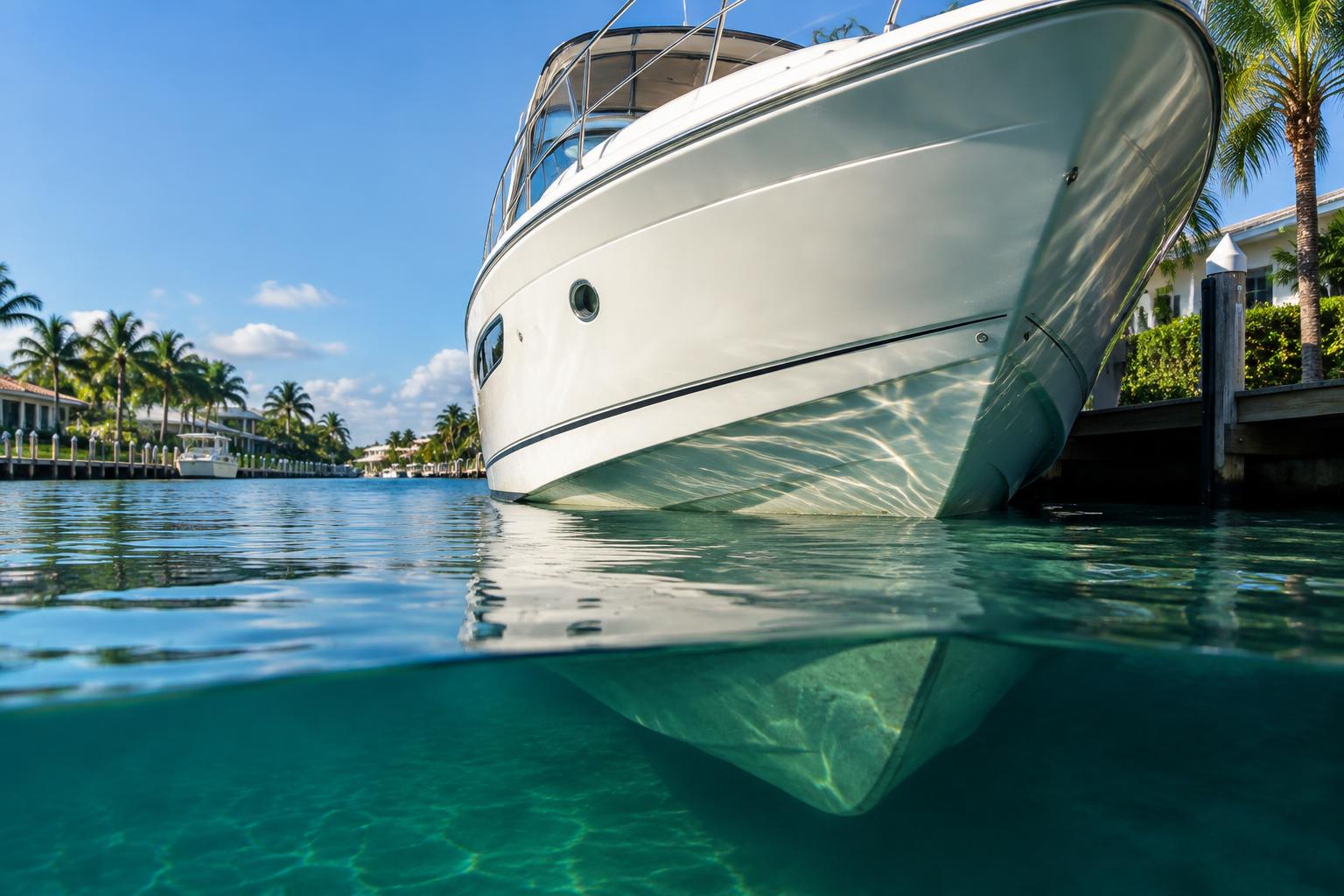
Different vessels have drastically different draft requirements. A center console fishing boat might handle shallow water with ease, but if you are looking at a deep-draft sailboat or a substantial motor yacht, the clearance beneath your hull is a primary logistical constraint.
In many of our local canals, such as those in Las Olas Isles, Coral Ridge, or the finger streets of Pompano Beach and Fort Lauderdale, the depth can change drastically from the main channel to your specific slip. Even if the main waterway is dredged to a healthy depth, the "approach" from the canal center to your private dock might be silting or shallow, especially at low tide. This is why a waterfront property must be evaluated in direct relation to the specific vessel that will call that dock home.
Don't Rely on Visual Inspection
Looking at the canal from the backyard or standing on the seawall doesn't tell you everything you need to know. The water surface hides a multitude of variables. You might see a neighbor with a boat docked nearby and assume you are safe, but they might have a different hull design, a different draft, or they may have already dealt with the cost and headache of dredging.
Never guess. I always advise my clients to look at the waterfront homes by boat size to get an idea of what vessels are currently accommodated in certain corridors, but that is only a starting point. Conditions vary wildly throughout the city. A property in the North Beach neighborhood will have different tidal influences and siltation patterns compared to a home further inland near the New River.
The Professional Approach to Verification
If you have specific water depth requirements, verify them independently. Do not rely on the listing description or a casual comment from a seller. In Florida, real estate transactions require a high level of vigilance. You should build a technical inspection into your offer contingencies.
First, hire a professional marine surveyor. While a general home inspector looks at the structure and the systems, a marine surveyor can evaluate the dock's stability and, more importantly, can help provide data on the water depth. You should also verify if the canal is a publicly maintained waterway or if the responsibility for dredging falls on the individual homeowners or a neighborhood association. This can lead to unexpected assessments down the road.
If you are just starting your search, I encourage you to browse the active waterfront homes in Fort Lauderdale to see which neighborhoods catch your eye. Once you have a shortlist, we can start looking at the logistics of each specific site.
Ask Before You Fall in Love
It is very easy to become emotionally attached to a house with a pool, a sprawling patio, and a beautiful sunset view. That is exactly why I urge you to ask the hard, practical boating questions before you sign a contract. If the property doesn't support the depth required for your current or future boat, finding that out early saves you from the heartbreak of losing an escrow deposit or, worse, closing on a property that leaves your boat stranded in the driveway.
Make your boat part of the search criteria from day one. I have been helping buyers navigate these waters since 1995, and I have seen too many people buy a home only to realize they have to pay tens of thousands of dollars to dredge the canal or, worse, buy a different boat to match the water. We can use the Dock & Draft Match boat-fit search to get a clearer picture of what your potential property can handle.
The Financial and Regulatory Side
Beyond the physical depth, consider the regulatory environment. Florida has strict environmental protections regarding the excavation of submerged lands. If you find a property that is "almost" perfect but the water is a few inches too shallow, do not assume you can just dig it out. Permits for dredging can be complex, expensive, and sometimes impossible to obtain depending on seagrass density and local environmental restrictions.
Before you commit, take a look at the Fort Lauderdale waterfront neighborhood comparison to understand the different architectural and nautical styles in the area. And if you are relocating from out of state, remember to factor in the tax implications—I highly recommend reading our guide on the Florida homestead exemption to understand how your primary residence status impacts your long-term ownership costs. If you are arriving from a high-tax state like New York, the transition to the Florida tax structure is a conversation we should definitely have early in the process.
Your Due Diligence Checklist
When you find a house you love, follow this process:
- Identify your draft: Know the exact measurement from the waterline to the deepest part of your boat’s hull (propellers, rudders, and drives).
- Review the survey: Ask for the latest property survey and see if it notes soundings or water depths.
- Check the tide: Visit the property at low tide. This is your worst-case scenario. If the water looks shallow then, it is shallow.
- Speak with neighbors: The people living on either side of the property are the best source of truth. They know if the city recently dredged the canal or if the tide has been hitting record lows.
- Verify the permit history: Check the city’s building department records for the dock. Has it been inspected? Are there open permits?
For a more comprehensive look at what to look for, I have put together a Fort Lauderdale waterfront buyer’s guide that walks you through these steps in detail. Buying waterfront property in South Florida is a dream for many, but it is a complex, asset-heavy investment that requires a specialized approach. Whether you are looking for a deep-water dock for a yacht or just a quiet place to keep a small center console, the numbers matter.
With 1,182 waterfront homes currently listed, there is plenty of opportunity to find the right fit, provided you are disciplined with your inspection. You can see the citywide inventory here. If you are looking to move up or down, or if you need help selling your current waterfront home to make the jump, my team and I are here to help you get the details right. You can also read through our client reviews to see how we have helped others navigate the Fort Lauderdale market over the last three decades.
Buying a waterfront home should be a rewarding experience that puts you on the water as quickly as possible, not a source of stress. By focusing on the "below the water" details now, you ensure that your time in Fort Lauderdale is spent enjoying the lifestyle, not battling the logistics.
Next step: Let's discuss your specific boating requirements and current inventory. Call me, Simon Gedz, directly at 954-562-1798.