
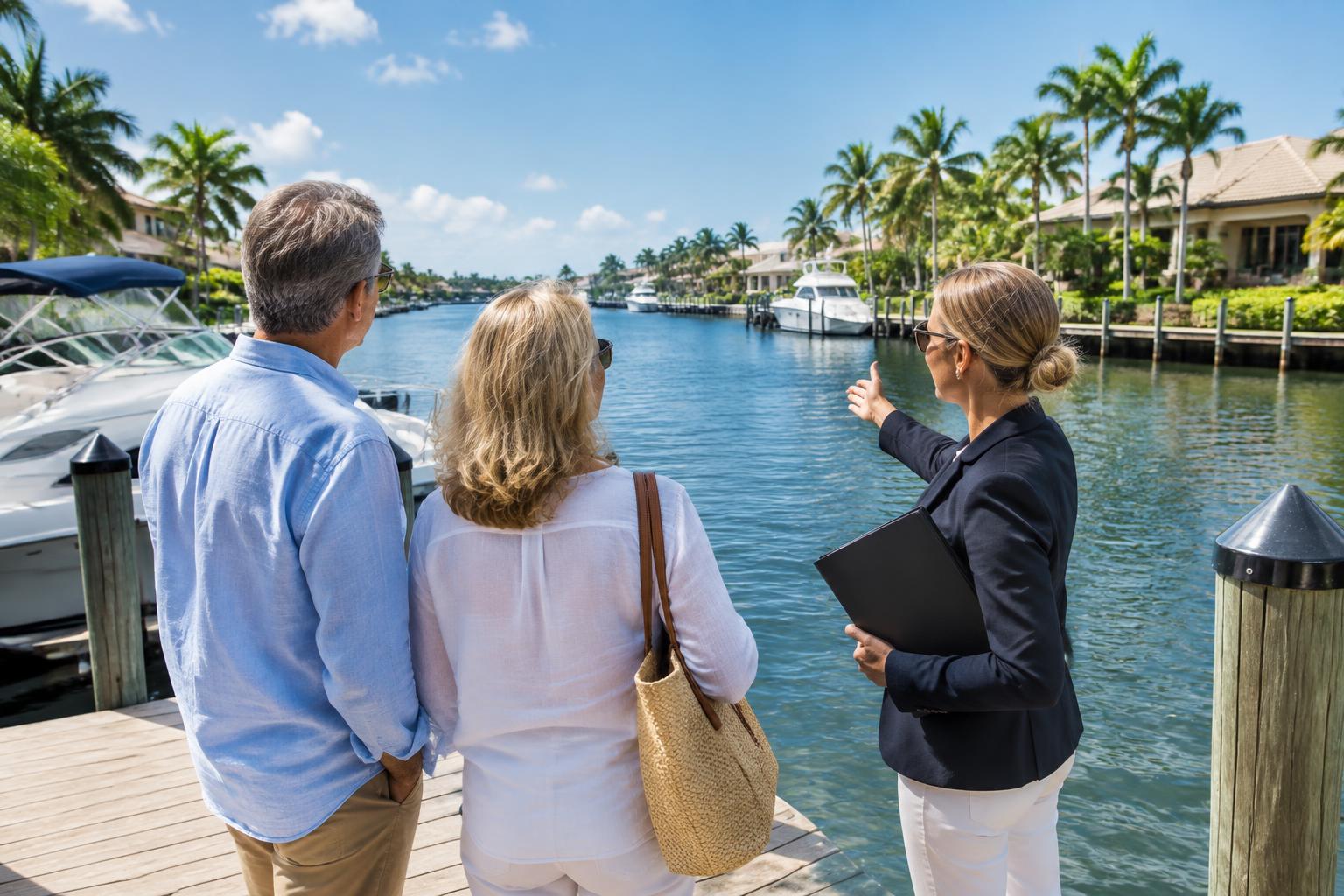
By Simon Gedz, Local Realtor
Charles Rutenberg Realty · 30+ years of South Florida market expertise · Published October 15, 2026
Originally published on the S.G. Trust Team blog.
Buying a waterfront home in South Florida is a major lifestyle upgrade, but it is also a complex engineering decision. As a Realtor who has been navigating this market since 1995, I have seen too many buyers fall in love with a granite countertop or a vaulted ceiling, only to realize the home is fundamentally incompatible with the vessel sitting in their slip. As of November 2026 on our site, there are 2812 active homes in Fort Lauderdale, with a median list price of $750,000. Among those, 1182 are waterfront properties, sporting a median price of $1,050,000. That premium isn't just for the view; it is for the utility. You must evaluate the water with the same skepticism you apply to a home inspection.
1. Will my current boat work at this property?
It is not enough to look at the water and assume it works. You need to measure the beam and length of your boat and compare it to the specific slip dimensions at the property. Does the current dock configuration accommodate your beam without encroaching on neighbors or navigation channels?
2. What about the boat I might own five years from now?
Many of my clients upgrade their vessels. If you are shopping for waterfront homes, consider the "growth potential" of your dock. If you buy a property that perfectly fits a 30-foot center console, you may be stuck when you decide to transition to a 45-foot yacht.
3. What usable dockage is available?
"Water frontage" is often confused with "dockable frontage." You might have 100 feet of seawall, but local zoning ordinances or easements may restrict where a dock can actually be placed. Verify the legal survey and check with local building departments to confirm your usable dock length. You can use our Dock & Draft Match boat-fit search to get a better sense of what you need.
4. What is the waterfront configuration?
Is the home on a canal, a turning basin, or the Intracoastal? A home in a wide basin offers easier maneuvering, whereas a narrow canal might restrict how you turn your vessel. Think about your experience level. Getting a 50-foot sportfish into a tight canal during a strong outgoing tide is a stress factor you should avoid if you value your nerves.
5. What should I know about the canal?
Ask about maintenance dredging. If a canal is shallow, the homeowners association or the city may have a scheduled maintenance plan—or, conversely, you might be responsible for the cost of dredging your section of the waterway. Always verify these potential liabilities before closing.
6. Are there bridges along my intended route?
In many of our fort-lauderdale-waterfront-neighborhood-comparison guides, I emphasize the "fixed-bridge factor." If you live west of the Intracoastal, you will likely encounter fixed bridges that limit your mast or tower height.
7. Do those bridges affect my vessel?
Even if a bridge says 10 feet of clearance, that is usually at mean high water. A heavy storm surge or an extreme high tide can reduce that clearance significantly. If you have an expensive radar arch or a tuna tower, you need to know exactly how much room you have at various tidal stages.
8. Are water-depth considerations relevant to my boat?
Draft is critical. You need to check the depth at both the dock and the channel leading out to the main waterway. Do not just take a seller’s word for it; I always recommend getting a current hydrographic survey. You can search our current inventory of waterfront homes in Fort Lauderdale to get an idea of where these properties are located.
9. What is the route toward open water?
Time is money, especially when you want to spend the day fishing or cruising. Ask yourself how long it takes to reach the ocean inlet from your dock. Navigating through no-wake zones is a reality in South Florida, and what looks like a two-mile distance on a map can take 45 minutes of slow-speed idling.
10. What should I know about the seawall?
The seawall is the most important structural element of a waterfront property. It is essentially your backyard’s foundation. Look for signs of cracking, bowing, or excessive erosion behind the cap. A failing seawall is a significant expense that must be factored into your total cost of ownership.
11. What permits, rules, or other requirements should be investigated for my intended waterfront use?
Florida is highly regulated regarding environmental protections. Before you decide to install a lift, a davit, or a PWC floating dock, you must investigate the permitting process. Some neighborhoods have strict homeowner association rules regarding boat size, hull color, or even how long a boat can be docked.
12. Am I choosing this house because it works for my boating lifestyle—or because I fell in love with the interior?
This is the most dangerous trap in real estate. It is easy to get distracted by a designer kitchen or a custom pool. However, if the dock layout is poor or the canal is too shallow for your draft, no amount of interior remodeling will fix that. You are buying a maritime asset, and it needs to function for your boat first and your aesthetic preferences second.
Don't Let the Kitchen Choose Your Dock
When you start your search, look for homes that align with your specific boat requirements. I have helped many buyers relocate from out of state—if you are moving from New York to South Florida, you might be surprised by how much water access varies neighborhood by neighborhood.
It is also vital to keep your financial planning in mind. Beyond the price of the home, remember to look into the Florida homestead exemption guide to see how you can manage your property taxes as a primary resident. If you are currently in a home that no longer fits your needs, we can also discuss selling with Simon to help you transition to a property that actually accommodates your vessel.
I suggest checking out our city-specific home searches to see how current listings align with your geography preferences. You can also view our client reviews to see how I have helped other boaters navigate these exact questions. My goal is to ensure you end up in a home where the transition from your back door to the open ocean is as smooth as possible.
Before you make an offer, ensure you have a professional survey conducted that covers both the land and the submerged land. If you need clarity on the process or want to walk through some of these waterfront neighborhoods in person, let’s talk. I have spent nearly three decades helping boaters find the right "fit" in this complex market, and I am happy to share that experience with you.
Next step: Let's make sure your boat fits the house before you write the check. Call me, Simon Gedz, at 954-562-1798 to discuss your specific boating requirements and start a targeted search.
