
By Simon Gedz, Local Realtor
Charles Rutenberg Realty · 30+ years of South Florida market expertise · Published October 15, 2026
Originally published: July 2024
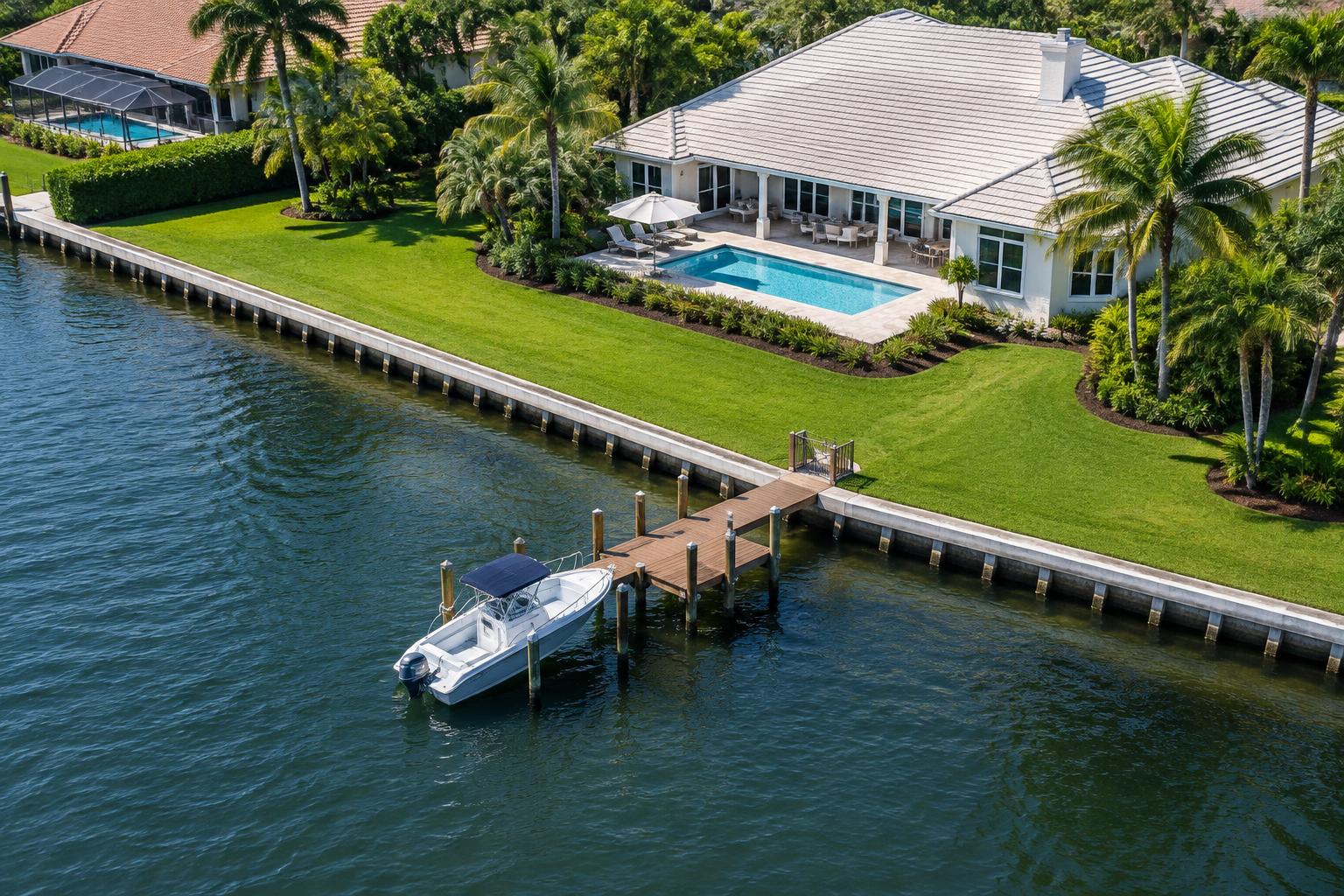
A listing says the property has "impressive waterfront frontage." As a Realtor who has been navigating the South Florida market since 1995, I have seen this phrase used to sell homes time and again. Does it mean you can use every single foot of that frontage to dock your vessel? Absolutely not.
In my experience with the S.G. Trust Team at Charles Rutenberg Realty, I have encountered too many buyers who fall in love with a wide-looking seawall in a photo, only to find out after closing that their specific boat is legally or physically barred from that space. It is a distinction that can cost tens of thousands of dollars to rectify, if it is even possible to fix at all.
Why the Distinction Matters
Waterfront frontage is a measurement of the property line that touches the water. It is a legal description of the land. Usable dockage, however, is a measurement of how much of that space can actually accommodate a vessel without violating local zoning codes, state environmental regulations, or basic geometry.
When you look at our current numbers, as of November 2026 on our site, we are tracking 2812 active homes in Fort Lauderdale with a median list price of $750,000. Within that subset, 1182 are waterfront homes, with a median price point of $1,050,000. When you are looking at these waterfront homes for sale in Fort Lauderdale, the premium you are paying for that dockage is significant. You need to ensure you are paying for something that actually serves your boating needs.
A property might have 100 feet of waterfront frontage, but if a portion of that is located on a sharp corner of a canal where the turning radius for a large yacht is restricted, or if there is a massive mangrove preservation area that cannot be touched, your usable docking space might shrink to 60 feet or less.
Don't Measure From a Photograph
I tell my clients every day: real estate photography is designed to highlight the best angles of a property, not to provide an accurate site survey for a marine architect. A wide-angle lens can make a narrow canal look like a wide waterway, and it can make a shallow, sediment-heavy slip look like a deep-water harbor.
Never assume the dock shown in the photo is the dock you are legally allowed to maintain. Over the decades, I have seen many unpermitted docks that were added by previous owners. If you buy a home with an unpermitted dock or a dock that violates current environmental setbacks, you may be required by the city or the Department of Environmental Protection (DEP) to remove it entirely or bring it into compliance at your own expense. Always ask to see the survey and the permit history for any marine structure on the property.
How to Verify What Matters
If accommodating your specific vessel is the primary driver of your purchase, you must treat your due diligence like a marine survey. Do not just look at the home; look at the water.
- Review the Survey: Look for the "Riparian Rights" and property lines. You need to know exactly where your neighbor’s dock ends and yours begins. In narrow canals, even a few feet of overlap can create legal headaches.
- Check the Canal Width: You can research canal width requirements here, but remember that your dock cannot impede navigation. If you put a 50-foot yacht in a narrow canal, you might be required to ensure that you leave a certain amount of clearance for other boaters to pass.
- Verify Depths: Never take a seller's word on water depth. I always recommend hiring a professional to conduct a depth sounder check, especially at low tide. A slip that fits your boat at high tide might ground your keel at a particularly low lunar tide.
- Permitting and Zoning: Check with the local building department in cities like Fort Lauderdale or Pompano Beach to see what the current code allows. Rules have changed significantly over the last thirty years. Just because a dock currently exists does not mean it is grandfathered in if you need to perform a major renovation.
A Few Feet Can Matter
When you are investing in a multimillion-dollar property, there is no room for "good enough." If your boat is 60 feet and you only have 55 feet of usable bulkhead, you are going to be frustrated every single time you attempt to dock, especially if there is a cross-breeze.
In many neighborhoods, we have to look at the geometry of the slip. Is it a fixed dock or a floating dock? How do the pilings align? Are there environmental buffers? In areas like Las Olas or Coral Ridge, space is at a premium. You can compare the differences in these areas by reading my Fort Lauderdale waterfront neighborhood comparison.
If you are moving to the area, you are likely already balancing the cost of living with the lifestyle benefits. You can find more information on the local cost of living here. Furthermore, as you settle in, make sure you understand your tax obligations, including the Florida homestead exemption guide, which can save you significant money once you become a permanent resident.
Practical Steps for the Boating Buyer
When you are ready to start looking, I suggest using our Dock & Draft Match boat-fit search to get a better handle on how different properties accommodate different vessel sizes. This tool is designed to save you time by filtering out properties that physically cannot handle your specific requirements.
If you are relocating from out of state, there are unique challenges beyond just the dock. I have helped many families navigate the process of moving from New York to South Florida, and the transition to waterfront living requires a shift in how you view property maintenance.
Before you make an offer, follow this simple checklist:
- The Survey: Get a recent one and confirm it shows the current dock location.
- The Permit: Request copies of all marine permits from the city or county.
- The Depth: Schedule an independent water depth check at low tide.
- The Neighbors: Walk the seawall. Look at how the neighbors have configured their own docks. Are they using the full length, or are they set back from the property line? This often tells you about local unwritten rules or specific zoning constraints you might not find in the public record.
If you are on the other side of this process and you are looking to sell your waterfront property, it is equally important to be transparent about your dock specs. Highlighting the legitimate capabilities of your slip—rather than just the raw frontage—builds trust with serious buyers and helps ensure that your transaction makes it to the closing table without a last-minute survey dispute.
You can read more of my thoughts on the market and the local community through my client reviews to see how we have handled these specific issues for past clients. Navigating the intersection of real estate law and maritime reality is what the S.G. Trust Team does best.
If you have questions about a specific property or if you are trying to understand how your boat size should affect your Fort Lauderdale home search, do not hesitate to reach out. I have been doing this for over three decades, and I have learned that the best way to avoid a problem is to measure it, investigate it, and verify it before the contract is signed.
Next step: Let's ensure your next home is the perfect fit for you and your vessel. Call Simon Gedz at 954-562-1798 to discuss your specific boating requirements and the current waterfront inventory.
