
By Simon Gedz, Local Realtor
Charles Rutenberg Realty · 30+ years of South Florida market expertise · Published October 12, 2026
Originally published on the S.G. Trust Team blog.
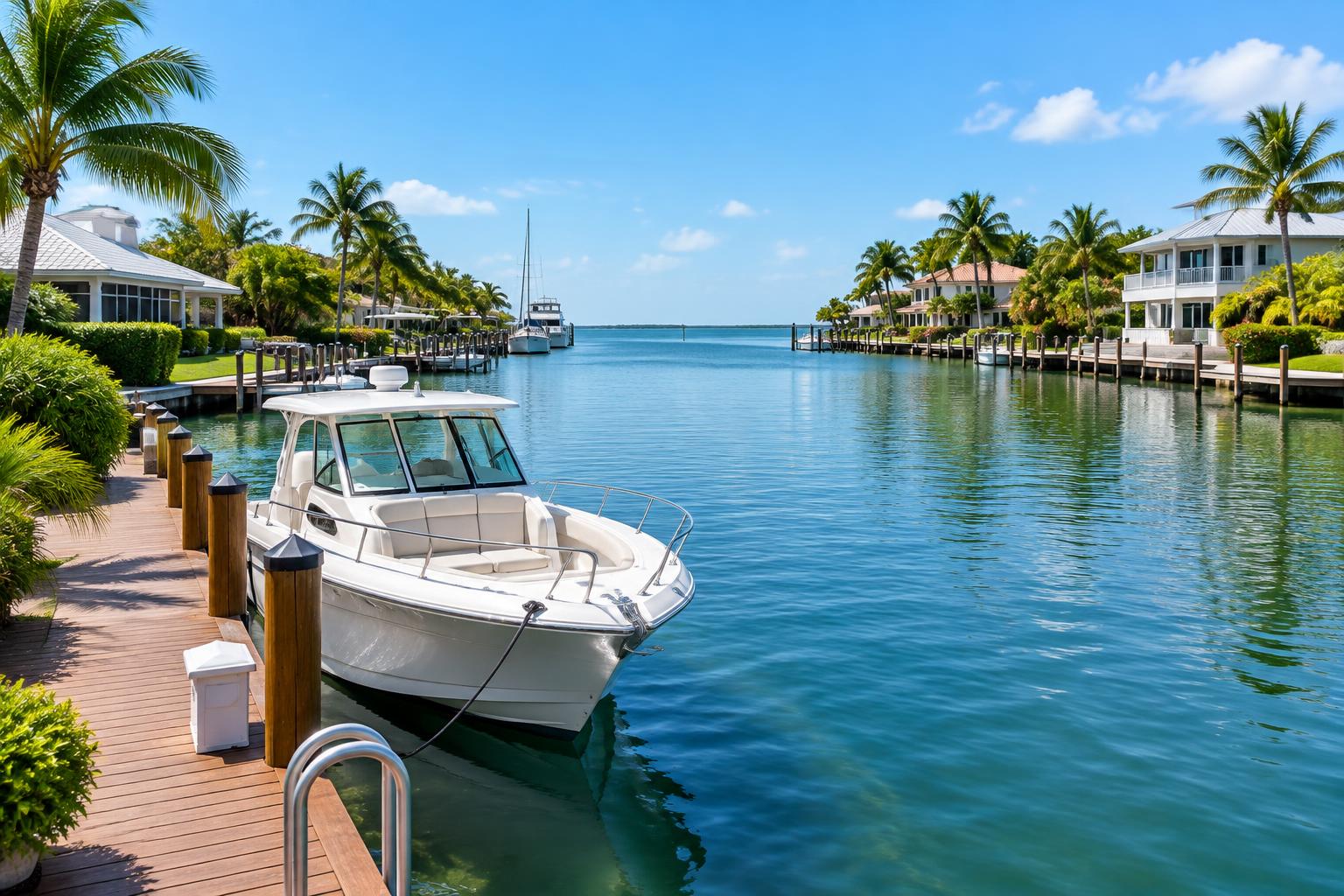
A boating buyer in South Florida shouldn't begin their journey by asking, “What's the nicest neighborhood?” That question is a trap. In a city like ours, “nice” is subjective, but the draft of your vessel and the clearance of the bridges are objective facts. If you want to live the waterfront life, start with the logistics. Ask yourself: “What does my boat require?”
As of November 2026 on our site, there are 2,812 active homes for sale in Fort Lauderdale, with a median list price of $750,000. When we narrow that search to the 1,182 properties classified as waterfront, the median list price climbs to $1,050,000. That premium is the cost of entry for the boating lifestyle, and it is a price you want to ensure is well-spent on the right slip.
Step 1: Define the Vessel
Everything starts at the waterline. You need to know your boat’s dimensions better than you know your own home’s square footage. What is your beam? What is your actual draft, and what is your air draft—the height from the waterline to the highest point of your electronics or radar arch?
In neighborhoods like Las Olas Isles, you have deep-water access, but you must account for fixed bridges if you are heading toward the Intracoastal Waterway or the Atlantic. If you own a large center console, you might not worry about bridge height, but if you own a sportfish with a tower, your search area shrinks instantly. I always suggest using our Dock & Draft Match boat-fit search to get a baseline before we even step into a car. You can also review specific homes categorized by boat size to see which docks can accommodate your specific length and width.
Step 2: Define Your Boating Habits
Are you a weekend cruiser or a daily commuter on the water? Your habits dictate your location. If you want to hit the sandbar or clear the inlet within ten minutes, you are looking at different zip codes than someone who enjoys a slow cruise through the canals.
Consider your primary destinations. If you frequent the Bahamas or the keys, you need quick ocean access without a long, idle-speed canal crawl. If you prefer the protected waters of the Intracoastal for dinner cruises, you might find more value slightly further inland. How you plan to use the boat determines if you need deep-water clearance for a yacht or if a protected finger canal is sufficient for a smaller deck boat.
Step 3: Narrow the Waterways
Once your boating needs are understood, you can begin evaluating locations accordingly. Fort Lauderdale is a mosaic of different water conditions. Neighborhoods like Harbor Beach offer some of the most sought-after deep-water access in the region, often with no fixed bridges to the inlet. Conversely, areas in Coral Ridge or Rio Vista may have varying depths and bridge restrictions that you must investigate on a street-by-street basis.
It is easy to get caught up in the curb appeal of a house, but for a boater, the water is the true amenity. Always check if the canal is maintained by the city or if it is a private waterway. If you are looking to simplify your search, you can browse all waterfront homes in Fort Lauderdale to see how inventory is distributed across these distinct maritime corridors.
Step 4: Evaluate Individual Properties
Even within the same general neighborhood—or even the same street—don't assume every waterfront home offers identical boating characteristics. One property might have a sprawling 100-foot seawall, while the house next door is tucked into a corner that makes docking a nightmare during a strong tide.
You must investigate the specific property. Does the seawall need repair? Has it been recently anchored? In Florida, seawall maintenance is generally the responsibility of the homeowner, and it is one of the most expensive hidden costs in waterfront living. Before you get serious about an offer, we need to inspect the orientation of the dock relative to the prevailing winds and the current. A slip that looks perfect at slack tide might be difficult to navigate when the tide is rushing through the canal.
Step 5: Then Evaluate the House
This sounds backward to some buyers. You are used to looking for the right kitchen or the right number of bedrooms first. But if boating is the primary reason you are purchasing waterfront real estate, it makes sense to reverse the process. Find the waterfront situation that works—the right depth, the right clearance, and the right dock configuration. Then, and only then, decide whether the house works for your family.
You can renovate the house. You can knock down walls, modernize the kitchen, or add a pool. You can change everything about the structure, but you cannot relocate the canal or deepen the waterway at a whim. The geography is fixed. If you buy a house with a boat slip that doesn't fit your boat, you have bought yourself a very expensive problem that no amount of interior design can fix.
Essential Due Diligence
Before we sign a contract, there are Florida-specific realities to keep in mind. Verify if the property has a valid submerged land lease if it extends into public water. Confirm the local zoning regarding dock height and lighting. Always consult our waterfront home due-diligence checklist to ensure you aren't missing the critical details that keep your boat safe and your insurance premiums manageable.
It is also vital to consider the financial side of your move. If you are coming from out of state, the tax implications can be significant. Review my guide on moving from New York to South Florida to understand how the transition affects your bottom line. Additionally, ensure you understand the Florida Homestead Exemption, as it provides real property tax benefits for permanent residents that can offset some of the costs of your waterfront acquisition.
I have been helping buyers navigate these canals since 1995. I have seen the waterfront change, but the fundamentals of a good boat slip remain the same. Before you fall in love with a listing, make sure the water supports your lifestyle. For a deeper dive into how neighborhoods differ, you can read my Fort Lauderdale waterfront neighborhood comparison. If you are considering selling your current property to upgrade your dockage, I can assist you with that process as well; learn more about selling with the S.G. Trust Team.
Boating in Fort Lauderdale is a privilege, but it requires a disciplined approach. Don't let the charm of a waterfront deck distract you from the reality of your draft. Do your homework, measure twice, and ensure the property is truly compatible with your vessel. You can also read more about the cost of living in Fort Lauderdale to get a clear picture of what the total investment will look like once you are settled in.
Next step: When you are ready to start looking at properties that actually fit your boat, give me a call at 954-562-1798. Let's make sure we find a home where both your family and your vessel are perfectly at home. You can also check our recent client reviews to see how we have helped others find their ideal waterfront retreat.