
By Simon Gedz, Local Realtor
Charles Rutenberg Realty · 30+ years of South Florida market expertise · Published October 18, 2026
Originally published on the S.G. Trust Team blog.
A common assumption I hear from buyers—especially those moving down from the Northeast—is: “Simon, it’s brand new. What could be wrong?”
I have been a Realtor since 1995, and if there is one thing I have learned, it is that a home is a complex machine, not just a structure. Whether you are looking at a luxury property in a neighborhood like Coral Ridge or a new build in Victoria Park, the idea that "new" equals "flawless" is a dangerous myth. New construction deserves independent scrutiny just as much as a 1950s ranch house does.
As of November 2026 on our site, we are tracking 2812 active homes in Fort Lauderdale with a median list price of $750,000. For those looking specifically at the water, we have 1182 waterfront homes with a median price of $1,050,000. When you are spending that kind of capital, you cannot afford to leave quality control solely to the developer’s internal team.
New Doesn't Mean Untouched by Humans
Homes in South Florida are built through incredibly complicated processes. We deal with specific hurricane codes, high humidity levels, complex HVAC systems, and the logistics of pulling materials through a supply chain that has been volatile for years.
You have electricians, plumbers, roofers, and landscapers all working in close quarters under tight deadlines. Even with the best intentions, errors happen. A wire might not be properly seated in a breaker panel, a drain line might not be perfectly sloped, or a seal around a window might be compromised. These are not always malicious shortcuts; often, they are simply human oversights. If you fail to catch them before closing, the responsibility shifts from the builder to your pocketbook, or worse, into a lengthy, frustrating warranty claim process.
The Goal Isn't to Distrust the Builder
My clients often ask if hiring an independent inspector will offend the builder. I tell them the same thing every time: the goal is not to distrust the builder; the goal is to understand the condition of what you are purchasing.
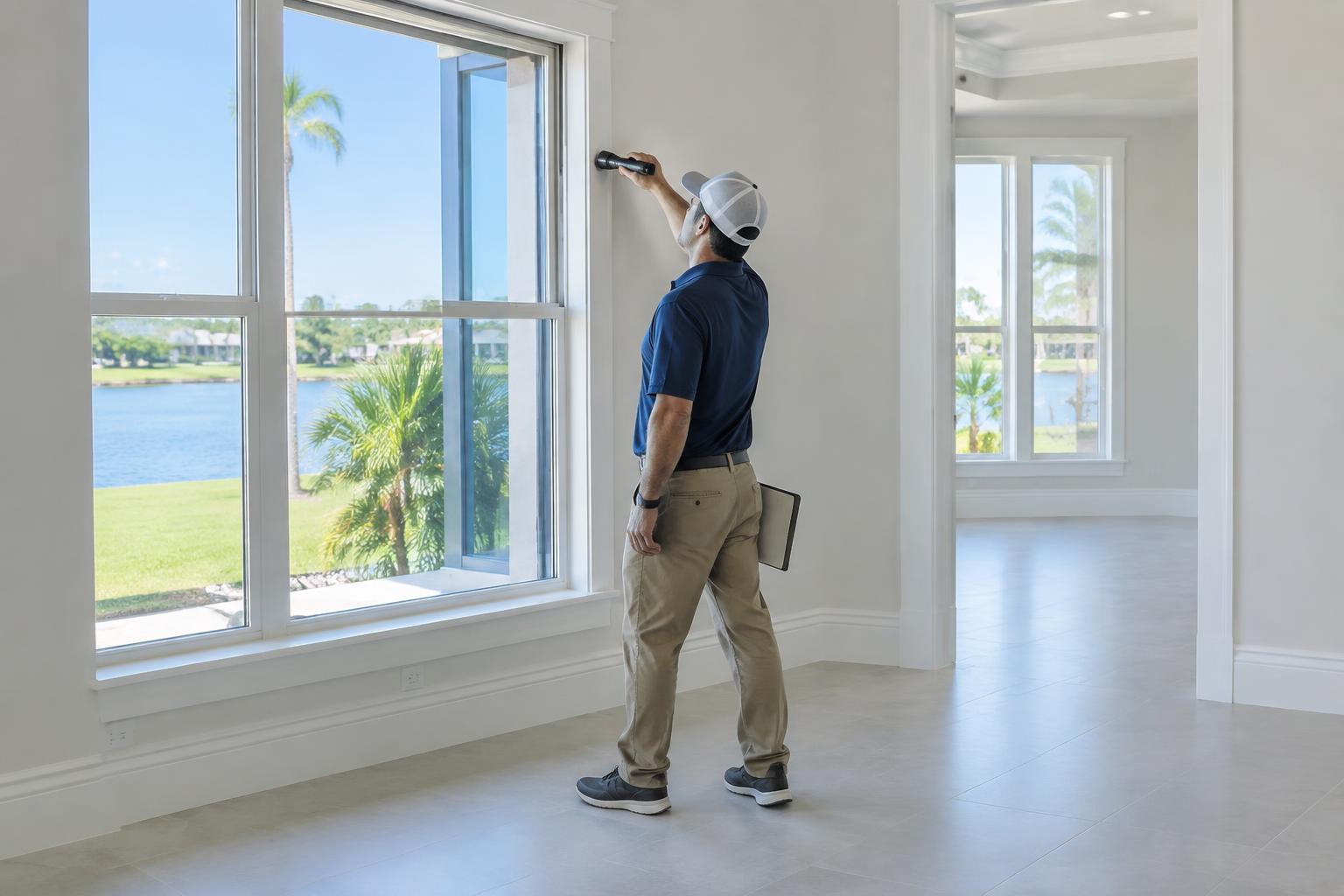
A professional home inspector brings a different set of eyes. They are not looking at the finishes or the staging; they are looking at the mechanics and the structural integrity. When you hire an inspector, you are gaining a baseline for your own home maintenance. You will learn where your shut-off valves are, how your water filtration system works, and how to verify that your HVAC system is performing to the manufacturer's specifications. If you are buying a home with specific boating needs, you should also be checking the dock infrastructure independently, especially if you have used our Dock & Draft Match tool to ensure your vessel fits the property.
Know Your Opportunities
In Florida, the purchase agreement for new construction is often drafted by the builder’s attorneys and is heavily skewed in their favor. However, this does not mean you have zero leverage.
Depending on the stage of construction, you may have multiple windows of opportunity. For example, some builders allow a "pre-drywall" inspection. This is critical. Once the walls are closed, you cannot verify if the insulation is properly installed, if the electrical runs are clear of framing, or if the plumbing is braced correctly. If your agreement allows for a pre-drywall walkthrough, take it. Use a professional who understands the specific Florida Building Code requirements for moisture barriers.
If you are buying a finished inventory home, the window is smaller, but no less important. Always ensure your contract includes a contingency period for an inspection, even if the builder claims the home has passed municipal code inspections. Municipal inspections are designed to ensure the home meets the minimum legal safety standards—they are not a comprehensive quality control check for your benefit.
Don't Wait Until Move-In to Pay Attention
If something needs clarification, earlier is always easier. It is far simpler to have a builder’s crew return to fix a leaky pipe behind an open stud bay than it is to have them open up a finished, painted, and trimmed-out wall.
When you do your final walk-through—what we often call the "blue tape" walk-through—take your time. Do not let the builder’s representative rush you. Check every single outlet with a circuit tester. Run every faucet and flush every toilet to check for drainage speed and leaks under the sinks. Open every window and door to ensure they are plumb and operate smoothly. If they stick or drag, that is an indication of settling or improper installation that needs to be documented.
Treat It Like a Major Purchase
Because it is.
The fact that nobody has lived there before should not cause you to abandon the careful approach you would use with any other expensive property. In South Florida, we have unique variables that make inspections even more vital. We have high salt content in the air that accelerates corrosion, intense UV radiation that breaks down exterior seals, and a water table that necessitates very specific foundation treatments.
If you are new to the area, I highly suggest you read my Moving from New York to South Florida guide to understand how our environment impacts home maintenance differently than it does up north. Additionally, ensure you are set up for your Florida Homestead Exemption properly, as this will affect your long-term cost of ownership, just as it is wise to compare neighborhood costs via our Fort Lauderdale waterfront neighborhood comparison.
Your Inspection Checklist
If you decide to move forward with a professional inspection—and I strongly recommend you do—ensure your inspector covers the following:
- Roofing and Flashing: Even on a new roof, check for loose shingles or improper flashing around chimneys and vents, which are common entry points for water during tropical storms.
- HVAC Systems: Verify the output temperature of the AC. In Florida, your unit works harder than anywhere else; ensure it is sized correctly for the square footage.
- Plumbing and Drainage: Verify that all exterior drainage (gutters and downspouts) directs water away from the foundation. Water intrusion is the number one enemy of Florida real estate.
- Electrical Panel: Ensure that the panel is properly labeled and that all breakers are secure.
- Exterior Seals: Check around windows and doors for gaps in caulking. If it is not sealed correctly, the high humidity will lead to mold growth behind your interior walls.
Before you finalize your decision, take a moment to look at our complete Fort Lauderdale new-construction buyer guide. It covers the nuances of dealing with developers in our specific market. You can also view my client reviews to see how we have helped other buyers navigate these exact scenarios.
Finally, remember that the builder’s sales representative works for the builder. My job, and the job of my team, is to work for you. We provide the objective viewpoint you need to ensure that when you finally turn the key in the lock, you are walking into a house that is truly ready to be your home. Verify everything, ask the hard questions, and never be afraid to delay a closing to ensure a deficiency is corrected. Your investment is too significant to settle for anything less than a home built to the standard you are paying for.
If you have questions about a specific builder or need assistance evaluating the potential of a waterfront property, give me a call. I have been helping buyers navigate the South Florida market since 1995, and I am happy to help you get the clarity you need. Reach out to me directly at 954-562-1798.
