
By Simon Gedz, Local Realtor
Charles Rutenberg Realty · 30+ years of South Florida market expertise · Published October 15, 2026
Originally published on the S.G. Trust Team blog.
You have spent weeks scrolling through listings, visualizing your weekends on the Intracoastal or heading out through the Port Everglades Inlet for a day of deep-sea fishing. You finally found the house. The seawall is in good shape, the pilings are sturdy, and your boat looks like it will fit perfectly at the dock. You think you are done, right? Not necessarily.
After helping clients navigate the South Florida market since 1995, I have learned that looking at the dock is only half the battle. You have to look at what lies between that dock and the open ocean. If you are buying a home in a place like Fort Lauderdale—where, as of November 2026 on our site, we are tracking 2812 active homes with a median list price of $750,000, including 1182 waterfront properties with a median of $1,050,000—bridge clearance is a critical part of your due diligence.
Why Bridges Change Everything
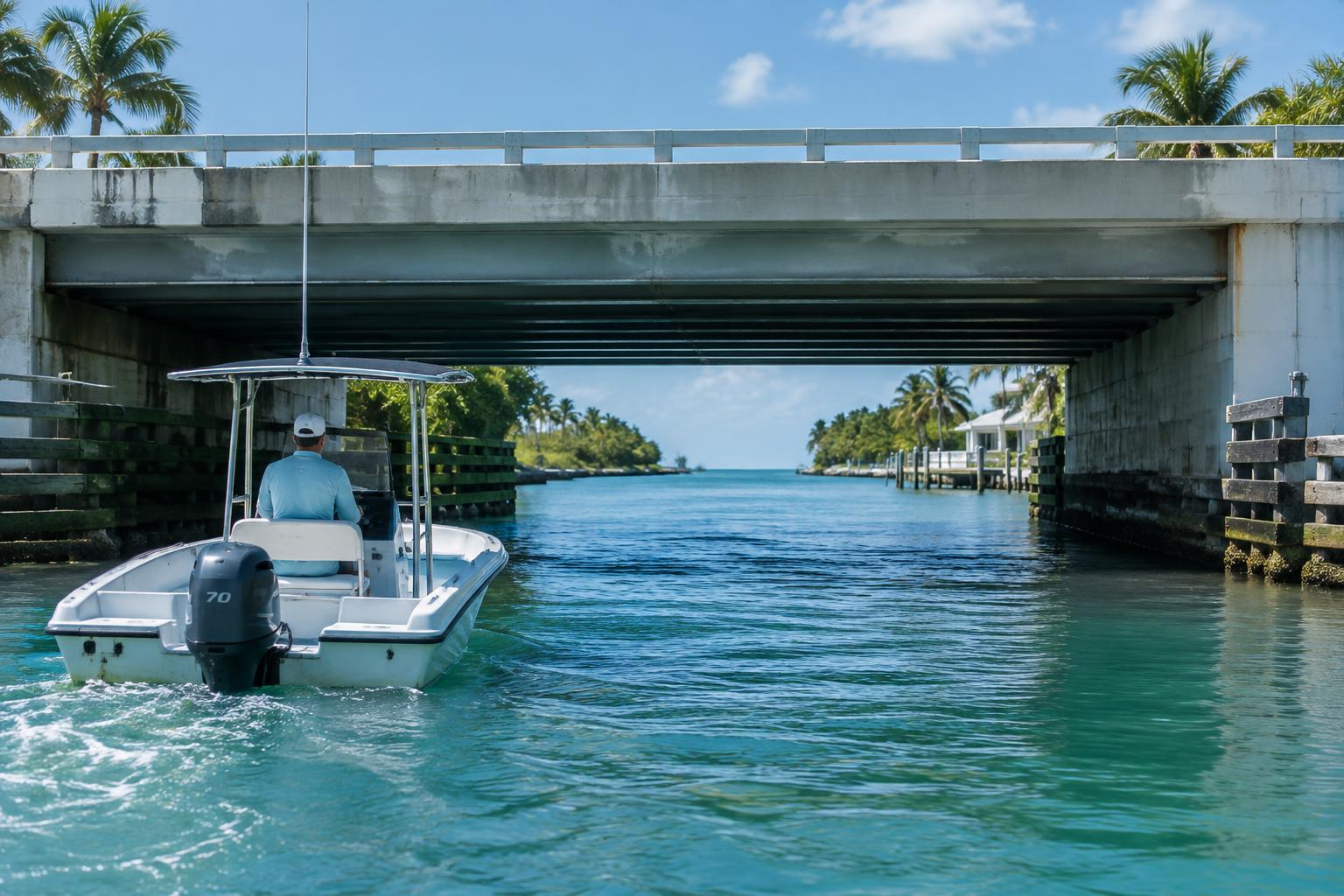
In Fort Lauderdale, being on the water is a lifestyle, but the configuration of our canals can drastically change how you use your vessel. You might fall in love with a property in a quiet neighborhood like Coral Ridge or Las Olas Isles, but if your boat has a flybridge or a radar arch, a fixed bridge might turn your dream home into a logistical headache.
If you have to wait for an opening or if your vessel physically cannot clear the underside of a fixed span, your boating experience changes from spontaneous to scheduled. I always tell my clients to evaluate the route, not just the property. You need to know exactly what stands between your backyard and the Atlantic.
Fixed Versus Movable Bridges: The Practical Reality
When you look at a map, you see blue lines and icons, but on the water, there is a massive difference between fixed and movable bridges.
A fixed bridge has a set vertical clearance that never changes. You must know your boat’s "air draft"—the distance from the waterline to the highest point on your vessel, including antennas and outriggers—down to the inch. If your boat is 15 feet tall and the bridge is marked at 12 feet, it is a non-starter.
Movable bridges, such as bascule (draw) bridges, offer a way through, but they come with their own set of constraints. Are there restricted hours? Do they open on demand, or only on the hour and half-hour? During peak season in South Florida, waiting for multiple bridge cycles can turn a twenty-minute trip into an hour-long ordeal. Before you write a contract, I suggest you search for homes by boat size to ensure your vessel matches the local geography.
Know Your Vessel’s True Dimensions
It is a common mistake to rely on the manufacturer’s brochure for boat height. Manufacturers often list the height in travel configuration, not the height with your specific gear added. Have you installed a new satellite dome? Did you add a specialized fishing tower?
I always recommend that buyers treat their boat’s height as a variable that must be measured manually. Do not take a seller’s word for it when they say a property is "great for big boats." Great for which boat? A 30-foot center console has vastly different needs than a 60-foot motor yacht. You can use our Dock & Draft Match boat-fit search to get a better sense of how your specific needs align with available properties in our Fort Lauderdale city inventory.
The Due Diligence Checklist
Buying a waterfront home in Florida requires a specific kind of inspection process. When we are looking at a property, my checklist for my clients always includes these steps:
- Measure at Low Tide: Always verify clearances at high tide to give yourself a buffer of safety.
- Consult Official Charts: Never rely on a listing description. Look at NOAA nautical charts for the area. If you are unsure how to read them, ask for a professional opinion.
- Check the Current Route: Navigate the path from the listing to the inlet during the time of day you actually plan to boat. This helps you identify blind spots, narrow channels, and bridge congestion.
- Research Neighborhood Restrictions: Some communities have private bridges or specific height restrictions that are not apparent from a general map. Review our waterfront neighborhood comparison to understand the nuances of different canal systems.
Don't Guess—Verify
The beauty of living in a place with as much history as ours is that there is a wealth of information available, but you have to know where to look. I constantly remind my clients that a listing description is marketing, not a navigation manual.
Whether you are relocating from out of state and navigating the Florida homestead exemption rules or moving here to enjoy the boating life full-time, you need data that is current. As of November 2026 on our site, we have seen a significant interest in specialized waterfront parcels. Do not leave your boat’s accessibility to chance. If a property looks perfect on paper, we take the extra time to verify the bridge heights along the transit route before we finalize your offer.
If you are just beginning this journey, I suggest reading through our boater's guide to buying a home in Fort Lauderdale. It covers the practical realities of owning a boat in these canals, including the things that often surprise even experienced boaters when they move to South Florida.
The Long-Term Perspective
Your waterfront home is likely one of the largest investments you will make. While the house itself is the priority, the "water rights"—your ability to reach the open sea efficiently—are what maintain the value of that investment. Buying in a location where you are constantly "bridged in" can impact your enjoyment and, eventually, your resale potential.
If you are ready to start looking at properties where the water depth, bridge clearance, and dockage meet your specific requirements, I am here to help you filter the noise. You can read my client reviews to see how I have helped others navigate these complex, water-dependent transactions, or reach out to me directly if you have a property to sell that requires a specialized understanding of the boating market.
For those of you moving from out of state, understanding the local geography is the first step toward a successful transition. South Florida boating is world-class, provided you have done your homework on the route to the ocean.
If you have questions about specific neighborhoods, such as the waterfront inventory available in Fort Lauderdale, or if you need help determining which canal systems accommodate your vessel's draft and air draft, let’s have a conversation.
Next step: Call me at 954-562-1798 to discuss your boating requirements and start a targeted search for your next home.
