
By Simon Gedz, Local Realtor
Charles Rutenberg Realty · 30+ years of South Florida market expertise · Published October 23, 2026
A dock isn't automatically useful simply because it exists. In my decades of representing buyers in South Florida, I have walked hundreds of properties where the dock was the deal-breaker—not because it was missing, but because it was fundamentally incompatible with the buyer’s lifestyle. As of November 2026 on our site, there are 2,812 active homes in Fort Lauderdale with a median list price of $750,000, while the 1,182 waterfront properties show a median price of $1,050,000. When you are paying that premium for waterfront access, you have to be certain the infrastructure matches your vessel.
Start With Your Boat
The most common mistake I see is buyers shopping for a house first and trying to fit a boat into the canal later. You must know your vessel’s specific dimensions: length overall (LOA), beam (width), and draft (how deep it sits in the water). A dock that looks great for a 25-foot center console will be a nightmare for a 50-foot sportfish. Before you browse waterfront homes for sale in Fort Lauderdale, pull out your boat’s specifications. If you are unsure if your boat will fit a specific property, use our Dock & Draft Match tool to get a better sense of compatibility.
Look at the Configuration
How the dock is positioned is just as important as its size. You need to consider the approach. Is the canal wide enough for you to turn your vessel around? Some of our older neighborhoods, like parts of Las Olas or Coral Ridge, have narrower finger canals that can make maneuvering a large yacht a daily chore.
Consider how you will secure the vessel. Are there pilings in the right place to handle your spring lines? Is there a floating dock component, or is it a fixed concrete slab? A fixed dock can be difficult if you have a boat with a low freeboard or if you live in an area with significant tidal shifts. Always visualize the docking process in your head: how will you step off the boat? Does the current push you toward or away from the dock when you are trying to land? If you are moving from a different state, you might want to look at our relocation resources to understand how local tidal patterns differ from what you are used to.
Determine Usable Space
Never assume that the property's total waterfront footage equals usable dockage. Zoning and riparian rights are complex here in Florida. You might have 100 feet of seawall, but if the neighbor’s dock encroaches on your turning radius, or if there is a protruding utility structure, you may not be able to utilize that full length.
Furthermore, verify the distance from your dock to the opposite side of the canal. If your neighbor across the way has a boat that extends significantly into the waterway, it can effectively narrow the canal and make it impossible for you to maneuver your own vessel. For a deeper dive into these environmental considerations, check out my Fort Lauderdale waterfront neighborhood comparison.
Look at Condition
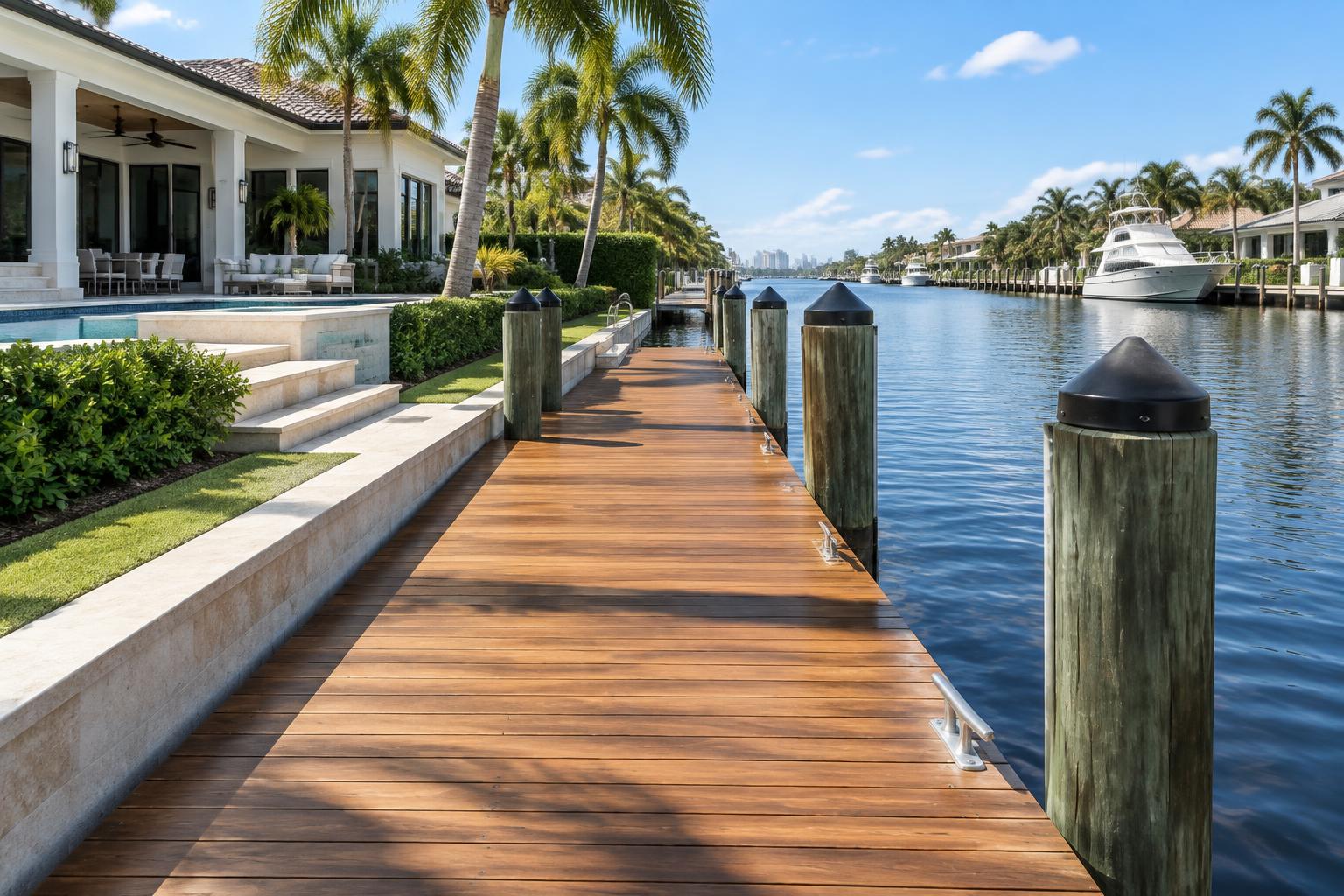
Docks are harsh environments. They are constantly exposed to saltwater, sun, and marine borers. When I tour a home, I am looking at the condition of the pilings, the integrity of the concrete, and the state of the wood or composite decking.
Look for signs of spalling concrete or rusted rebar, which is a major red flag. If the dock is wood, check for rot, especially near the base of the pilings. If you see signs of neglect, do not just assume it is a cosmetic issue. Docks are subject to strict environmental regulations in Florida. Replacing or repairing a dock often requires permits from the Florida Department of Environmental Protection (DEP) or the Army Corps of Engineers. Do not underestimate the cost or the time involved in bringing a dilapidated dock up to code.
Investigate Documentation
If the dock or related improvements like a boat lift are central to your purchase, you must investigate the paperwork. Ask the seller for all permits associated with the seawall and the dock. In Florida, unpermitted work is a liability that stays with the property. If you buy a home with an illegal dock, the city can require you to remove it at your own expense.
Always verify that the dock is within the property line extensions. I have seen disputes where a dock was built slightly into the neighbor’s water rights area. A professional survey is your best friend here. If you are curious about what documents to collect, read my guide on waterfront permits and verification.
Think Ahead
Even if your current boat fits perfectly, think about your next one. Will the setup still work if you decide to upgrade to a larger vessel or add a boat lift? For a serious boater, future flexibility adds long-term value to the property. If you choose a house that can accommodate a larger lift, you are future-proofing your investment. If you are looking to see which properties offer the most flexibility, browse homes categorized by boat size.
Don't Buy a Dock From a Photograph
Photographs in a listing are meant to highlight the aesthetic appeal of a home, not its technical utility. A wide-angle lens can make a narrow canal look like a wide bay. A high-tide photo can make a dock look more accessible than it is at low tide.
If dockage is the driving factor for your move to Fort Lauderdale, you must get out there and see it. Bring your boat’s measurements. Look at the water depth. Talk to the neighbors about the canal's behavior during the rainy season or hurricane season. If you are ready to start your search, you can view all active listings in the city to see what is currently on the market.
Buying waterfront property is about more than just the house; it is about the lifestyle on the water. It is a significant investment, and the details regarding your dock are not minor—they are essential. If you are coming from out of state, or even if you are a local, understanding the tax implications of your new purchase is also vital; I recommend reviewing a Florida homestead exemption guide to understand how your primary residence status impacts your taxes.
My role as your Realtor is to help you navigate these technicalities so you can focus on the enjoyment of your new waterfront life. I have been helping buyers find their perfect match since 1995, and I have seen how much the right dock can improve a property’s enjoyment. Whether you are looking for deep-water access for a large yacht or a simple dock for a weekend fishing boat, I am here to help you vet the options properly.
You can also read reviews from past clients to see how I have helped others navigate the complexities of our unique South Florida market. When you are ready to get serious about your search, or if you need help selling your current property to make the move, reach out.
Next step: Evaluating waterfront property is a process that requires attention to detail. If you are ready to start looking at homes that truly fit your boat and your lifestyle, call me, Simon Gedz, at 954-562-1798.