
By Simon Gedz, Local Realtor
Charles Rutenberg Realty · 30+ years of South Florida market expertise · Published October 23, 2026
Originally published: August 2024
A waterfront buyer can spend 30 minutes admiring the kitchen and 30 seconds looking at the seawall. In my decades of experience, I have seen buyers fall in love with high-end appliances and designer cabinetry, only to ignore the foundation of the property’s value: the wall holding the ocean or canal at bay.
That priority list needs to change immediately. When you are looking at Fort Lauderdale waterfront homes, you are buying more than just a home; you are buying a piece of coastal infrastructure. As of November 2026 on our site, there are 2,812 active homes in Fort Lauderdale with a median list price of $750,000, but when you narrow your search to the 1,182 waterfront properties, the median list price jumps to $1,050,000. That premium is largely attributed to your water access, and if the seawall fails, that premium evaporates quickly.
What Does a Seawall Do?
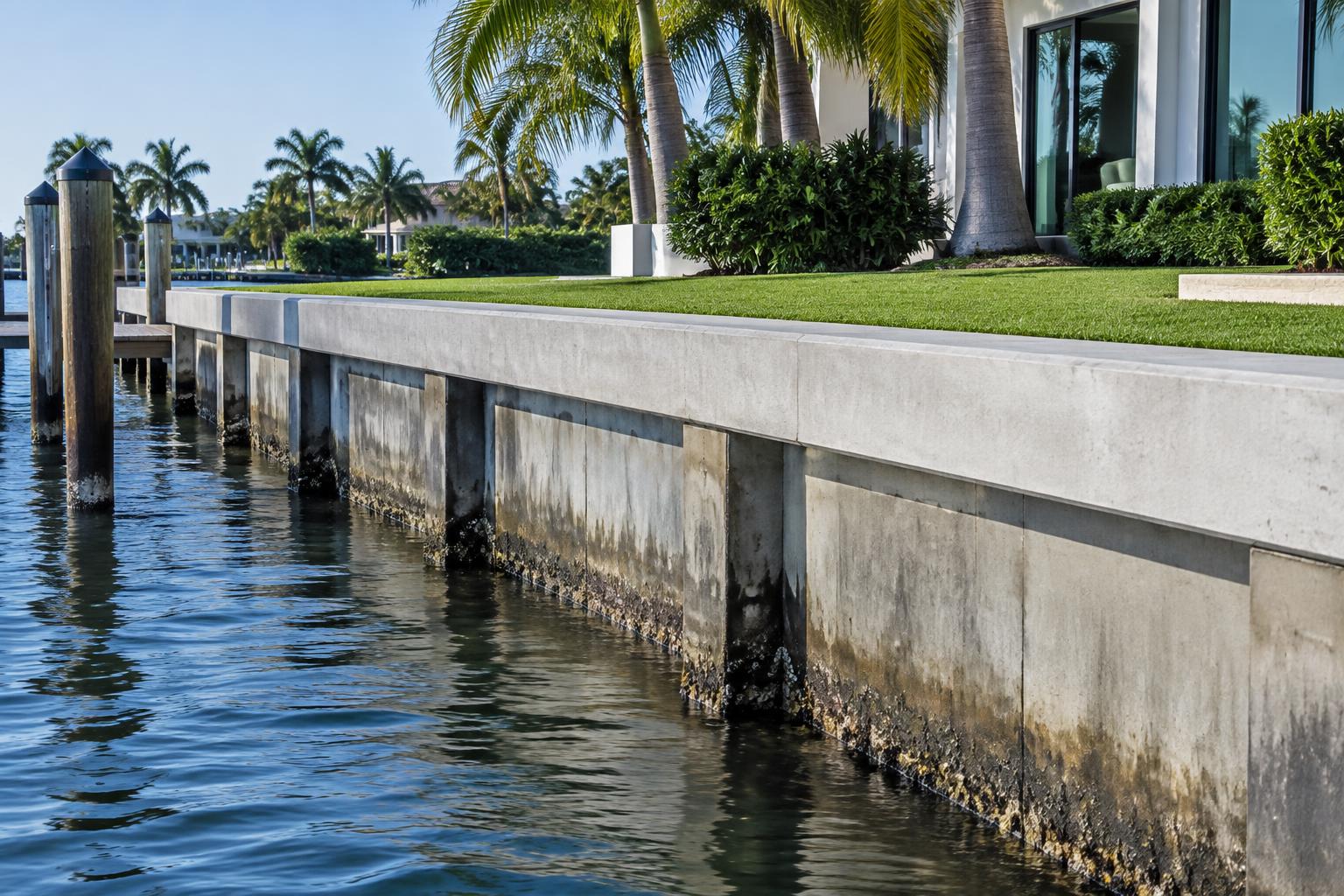
In simple terms, a seawall is the barrier separating your property from the waterway. Its job is to prevent erosion, manage tidal shifts, and protect the soil beneath your foundation from being washed away into the canal. In a city like ours, where the tide comes in and out every single day, this wall is under constant pressure. It is not a passive structure; it is a dynamic piece of engineering.
Why Condition Matters
Waterfront infrastructure requires maintenance, repair, and eventually, significant replacement. If you neglect a seawall, you aren't just risking a cosmetic issue; you are risking the integrity of your backyard, your pool deck, and potentially the home itself.
When I work with clients, I emphasize that you should never judge a seawall by its appearance alone. A concrete wall might look solid from the vantage point of your deck, but it could have "voids"—pockets of missing soil behind the concrete caused by water leaking through cracks or failing tie-back systems. These voids can lead to sudden, expensive sinkholes.
The Inspection Checklist: What to Look For
Since I began my practice in 1995, I have seen too many buyers skip the specialized inspection. Here is my practical approach to vetting a seawall:
- Check for "Weep Holes": These are the small openings meant to let water drain from behind the wall. If they are clogged or nonexistent, pressure builds up behind the wall, leading to cracks.
- Look for "Cap" Cracks: The cap is the top section of the wall. If there are long, horizontal cracks, it often indicates the wall is leaning or settling.
- Inspect the Tie-Backs: These are the steel rods that anchor the wall to the ground. If you see signs of rust staining or if the anchors seem to be pulling away from the concrete, that is a red flag.
- Vegetation and Drainage: Look at the landscaping. Are there large trees growing right against the seawall? Their roots can compromise the integrity of the wall over time.
- Tidal Marks: Observe the wall during low tide. If you see significant staining, pitting, or exposed rebar, the wall has been exposed to salt water for too long and may be nearing the end of its life.
The Paper Trail: Ask About History
Never assume the seller is going to volunteer that they are having trouble with the wall. You must investigate. Ask your agent to pull all municipal permits for the address. Have there been seawall repairs? Was the cap recently raised? If the seawall was replaced, was it permitted and inspected by the city?
If the documentation is missing, do not assume it was done correctly. Work with a licensed marine contractor to perform a visual assessment. While a standard home inspection is vital for the interior, it rarely covers the structural integrity of a seawall. I always suggest bringing in a specialist who understands the specific geology of your neighborhood, whether you are in Las Olas, Coral Ridge, or Rio Vista. You can compare these areas using our Fort Lauderdale waterfront neighborhood comparison to understand what kind of water depth and wall conditions are typical for those specific streets.
Consider the Bigger Picture
The seawall is not an isolated feature. It is part of your property's overall waterfront system. That system includes your dock, your davits, your boat lift, and the depth of the water at your slip. Before you fall for that granite kitchen, check if your boat will actually fit. Use our Dock & Draft Match boat-fit search to ensure your vessel won't be grounded at low tide.
Furthermore, remember that different areas have different rules regarding height requirements. The City of Fort Lauderdale has specific regulations regarding seawall height and maintenance. If your wall is lower than the current code requirements, you might eventually be required to raise it, which is a massive expense. You should verify the current ordinances through the city’s building department or have your agent provide a summary of the latest updates.
Don't Let the Interior Distract You
A beautiful renovation is exciting. Open floor plans and high-end finishes are great for resale, but they do not make the structural components of the house irrelevant. I have walked through homes where the interior was pristine, but the seawall was literally crumbling into the Intracoastal. The cost of replacing a seawall can easily run into the tens of thousands—or even hundreds of thousands—of dollars, depending on the linear footage and the soil conditions.
If you ignore the seawall during the due diligence period, that bill becomes yours the second you close. Do not be the buyer who finds out about a wall failure during the first high tide after move-in.
For those moving from out of state, the learning curve is steep. You are dealing with saltwater corrosion, marine-grade requirements, and unique insurance considerations. If you are relocating from a different climate, I highly recommend reviewing our moving from New York to South Florida resources to understand how the cost of ownership changes when you go from a landlocked home to a waterfront property.
As you start your search, stay organized. Use this complete waterfront home due-diligence checklist to ensure you are checking the "hidden" items before you submit an offer. If you are at the beginning of your journey, you can start by browsing active inventory through our city search for Fort Lauderdale to get a feel for the market before we hit the streets.
Understanding Your Rights and Responsibilities
Florida law places the responsibility of seawall maintenance squarely on the property owner. You are responsible for keeping it in good repair, and in some cases, you are responsible for damage caused to a neighbor’s wall if your structure fails. It is also important to consider your Florida homestead exemption status, as the cost of these structural repairs is not something you can simply defer.
If you are currently thinking about selling, it is just as important to get your seawall in order before you list. A clean, well-maintained wall makes for a much smoother inspection process and gives buyers confidence. If you need help preparing your property for the market, you can see how we handle selling with Simon to ensure you are presenting your waterfront asset at its absolute best.
Buying a waterfront home is one of the most rewarding experiences you can have in South Florida. I have helped families navigate these waters since 1995, and the key is always patience and professional guidance. You want to enjoy your sunset views from your deck, not worry about the concrete beneath your feet. Check the wall, check the permits, and work with someone who knows exactly what to look for when the tide goes out.
If you have specific questions about a property you have seen or want to discuss the best neighborhoods for your boat size, please reach out. I am here to help you make an informed decision so you can focus on the lifestyle, not the repairs.
Next step: Call me, Simon Gedz, at 954-562-1798 to discuss your specific waterfront needs and to schedule a tour of the best available properties in Fort Lauderdale. You can also view my client reviews to see how I have helped other buyers navigate the complexities of our local market.