
By Simon Gedz, Local Realtor
Charles Rutenberg Realty · 30+ years of South Florida market expertise · Published October 28, 2026
Originally published: August 2024
Two homes appear similar. They might have the same square footage, the same number of bedrooms, and even similar interior finishes. Yet, one is listed for significantly more than the other. The difference is the water.
In my thirty years of working in South Florida real estate, I have seen buyers struggle with the math of the waterfront premium. As of November 2026 on our site, we have 2812 active homes in Fort Lauderdale with a median list price of $750,000. When you narrow that down specifically to the 1182 waterfront listings, the median price jumps to $1,050,000. That gap represents a massive investment, and it is my job to make sure you understand exactly what you are paying for when you cross that line.
You Are Not Buying Only the House
When you buy a property that sits on the Intracoastal or one of our deep-water canals, you are acquiring an asset that is fundamentally limited in supply. They stopped making waterfront land a long time ago.
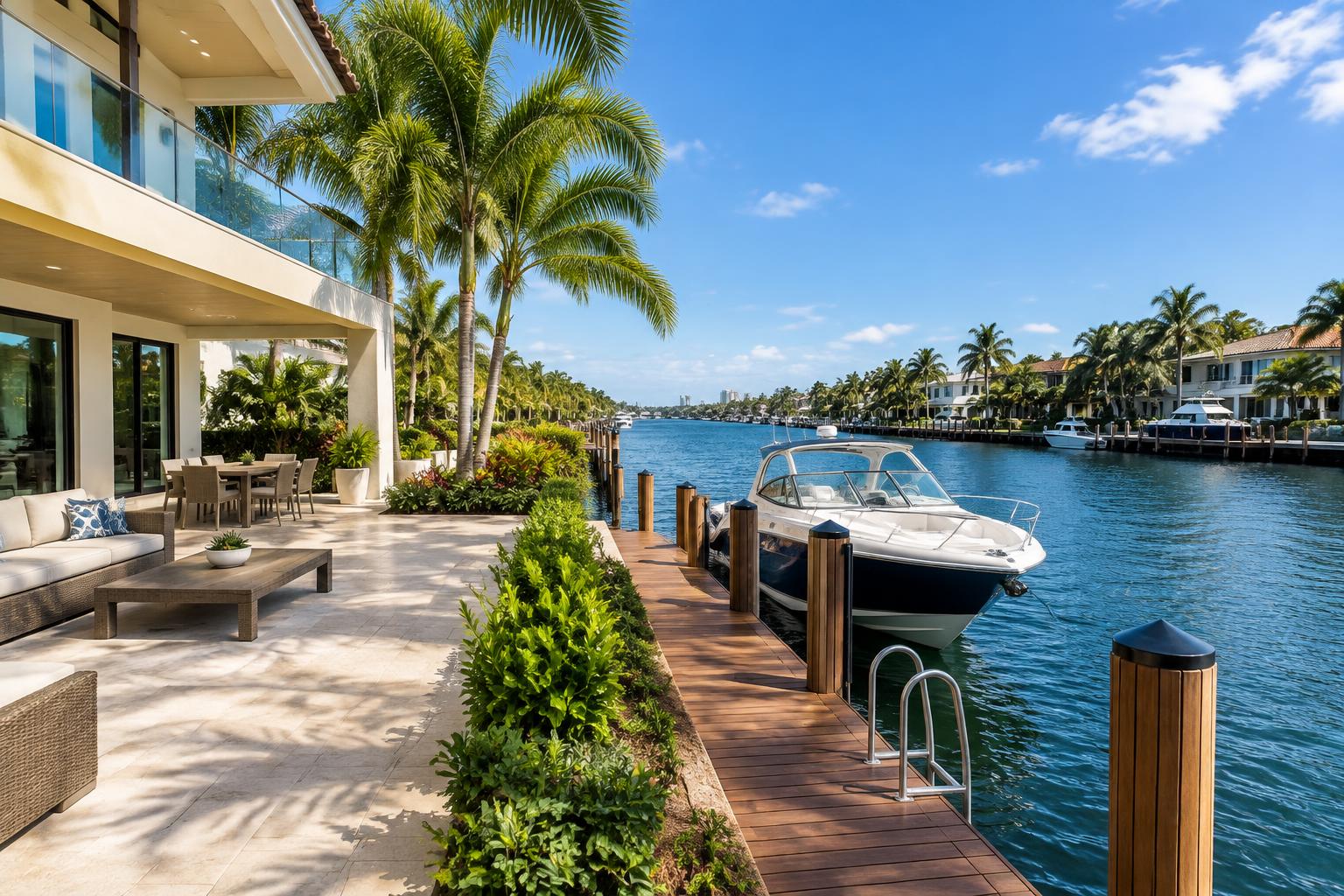
When you pay a premium for a waterfront home, you are paying for proximity to the ocean, the protection of a seawall, and the lifestyle that comes with being on the water. If you are comparing a property in a neighborhood like Coral Ridge or Rio Vista, the waterfront home offers a tangible asset—the riparian rights and the water frontage—that a house three streets inland simply cannot replicate. You are buying the ability to step off your back porch and onto a boat, a privilege that commands a higher market price for very practical reasons.
For Boaters, It Can Change Everyday Life
I often tell my clients that if you own a boat, the house is secondary to the dockage. If you are a boater, your home search should be driven by technical specifications rather than aesthetic ones. You need to look at water depth at low tide, the width of the canal, and whether there are fixed bridges between your house and the ocean.
Before you make an offer, use our Dock & Draft Match boat-fit search to ensure the physical infrastructure matches your vessel. A home that looks perfect on paper might be a nightmare if your 50-foot yacht cannot clear the local bridges or if the canal is too narrow for your beam. I have seen buyers fall in love with a property only to find out their boat cannot safely navigate to the slip. Always verify the draft and bridge clearances through official nautical charts or a certified marine surveyor before committing.
For Non-Boaters, Ask a Different Question
If you do not own a boat, the decision becomes more philosophical. You are paying for the intangible experience. Ask yourself: How much do you value the view, the atmosphere, and the setting?
Living on the water changes your daily rhythm. You wake up to the reflection of the sun on the ripples, you watch the boats pass by, and you generally enjoy more privacy since you do not have a neighbor behind you looking into your windows. However, this comes with increased maintenance—salt air is relentless on exterior paint, metal fixtures, and air conditioning compressors. If you are not going to use the water for recreation, you need to decide if the serenity and prestige justify the higher insurance premiums and maintenance costs associated with waterfront living.
Don't Pay for a Feature You Don't Value
I always tell my buyers: do not pay for a feature just because it is on the listing. If you do not intend to fish, swim, or boat, do not pay an extra $300,000 just for a seawall that you have to maintain.
Sometimes, a buyer is better served by looking for a dry lot in a prestigious neighborhood. You can often get more square footage or a newer build for the same price by moving just a few blocks away from the water. Explore your options by checking our city search for Fort Lauderdale to see the range of non-waterfront properties available. It is important to compare these to our curated list of waterfront homes in Fort Lauderdale to see if the trade-off in luxury or space is worth the cost of the view.
And Not All Waterfront Is Equal
Two waterfront homes can have completely different characteristics. A home on a wide, deep-water canal leading directly to Port Everglades is significantly more valuable than a home located on a shallow finger canal that becomes impassable at low tide.
When you look at a property, don't just look at the water. Look at the seawall condition. A failing seawall can be a massive capital expenditure. Verify who is responsible for the maintenance of the canal frontage, and check if the home has a dock that was permitted correctly. I always advise my clients to review the waterfront due-diligence checklist to ensure they aren't inheriting someone else's permitting headaches.
Evaluate the Specific Property
The word “waterfront” is a broad label, but it is not a guarantee of quality. I strongly suggest you spend time in a neighborhood at different times of the day. Is the boat traffic noisy on weekends? Does the tide flood the street? These are things you won't see in a brochure or an online gallery.
Before you get too far into the process, look into the tax implications as well. If you are moving here from out of state, make sure you understand how the Florida Homestead Exemption works. While it doesn't eliminate the premium for waterfront homes, it does provide significant relief on your primary residence taxes. For those moving from further away, check out our relocation guide for a broader view of how to adjust your budget for our local market.
If you are serious about finding the right fit, you need to be honest about your priorities. Are you looking for the best boating access? The best view? Or perhaps you are looking for a waterfront home based on your boat size. Every choice carries a different weight in the final price you pay.
For those considering an investment, you can see how different areas stack up by looking at our Fort Lauderdale waterfront neighborhood comparison. This gives you a clear sense of why the premium varies from one canal to the next.
Finally, keep in mind the cost of upkeep. Owning on the water is not a "set it and forget it" investment. It requires regular inspections, especially of the seawall, the dock, and the lift. If you are unsure about whether you are prepared for this, I invite you to read my thoughts on selling with the S.G. Trust Team to see how we approach the market, or check out our client reviews to see how we have guided others through these high-stakes decisions.
Whether you are looking for a boater's paradise or a peaceful home with a wide-water view, my goal is to make sure you are making an informed decision. Don't rush into a purchase because the water looks inviting; take the time to evaluate the mechanics, the costs, and the true utility of the property.
Next step: If you are ready to evaluate the current market and want an honest assessment of which waterfront homes represent true value for your specific lifestyle, call me at 954-562-1798. Let’s discuss your priorities and walk through the available inventory together.